

Dispatch Lead Time vs Transit Time
When you place an order, the total time before it lands on your doorstep is made up of two separate stages: how long it takes us to get your order out the door, and how long the carrier takes to deliver it. These are two different things, and it helps to understand the difference when you are estimating when your parcel will arrive.
Total delivery time = dispatch lead time + transit time.
Dispatch lead time (our part)
Dispatch lead time — sometimes called handling or processing time — is the time between you placing and paying for your order and it leaving our warehouse in Hornsby, NSW. During this window we pick, pack, and label your parcel and hand it to the carrier.
- In-stock orders: Orders placed and paid before 2:00 PM Sydney time on a business day are usually packed and dispatched the same day. Orders placed after that cutoff, or on weekends and public holidays, are dispatched on the next business day.
- Backorders and overseas stock: If an item is not in stock, dispatch lead time is longer because we first need the stock to arrive. The estimated availability date shown on the product page is the dispatch part of the journey, not the delivery date — transit time is added on top. See Backorders & Overseas Stock.
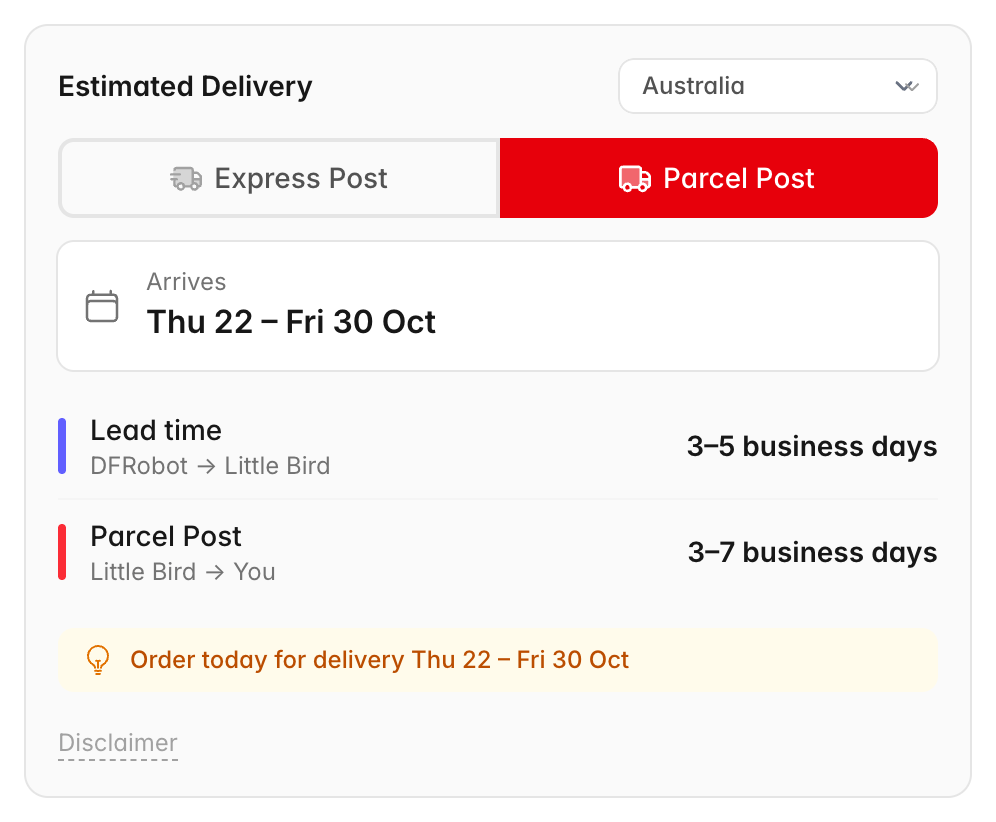
Dispatch lead time is entirely on our side, and it is the part we can usually give you a firm answer on.
Transit time (the carrier's part)
Transit time is how long your parcel spends travelling with the carrier — Australia Post or a courier — from the moment it leaves our warehouse until it reaches your address. It depends on the shipping method you choose and how far your address is from Sydney.
- Parcel Post (Australia Post): 3 to 7 business days, longer to some remote areas.
- Express Post (Australia Post): 1 to 3 business days.
- New Zealand: 6 to 12 business days with International Standard, or 2 to 6 with International Express.
Transit time is an estimate provided by the carrier and is counted in business days from the date of dispatch. It can be affected by carrier disruptions, severe weather, and busy periods such as the holiday season. For full estimates by method, see Estimated Delivery Times.
A worked example
Say you order an in-stock part at 10:00 AM on a Tuesday with Parcel Post to a Melbourne address:
- Dispatch lead time: Same day — it goes out on Tuesday because you ordered before the 2:00 PM cutoff.
- Transit time: 3 to 7 business days with Australia Post.
- Estimated arrival: Between that Friday and the following Thursday — Tuesday's dispatch plus the carrier's transit window.
Now imagine the same part is on backorder with stock due in 7 business days. The transit time does not change, but dispatch happens once the stock arrives — so your total wait is the 7-day dispatch lead time plus the 3 to 7 business days in transit.
Why we show them separately
Keeping the two figures apart means the estimate stays honest. We can commit to our dispatch lead time, but the days a parcel spends in the carrier's network are outside our control. Your order page shows both: when we expect to dispatch, and when the carrier should deliver.
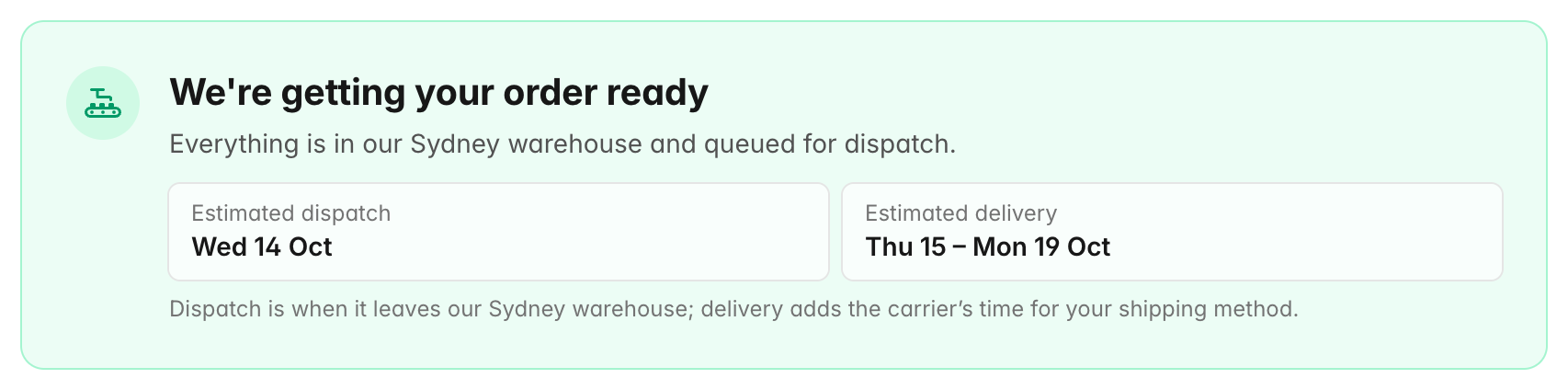
Tracking starts the moment your order is dispatched, so you can follow the transit stage yourself — see Tracking Your Delivery.
If an order has been dispatched but the transit estimate has come and gone, get in touch and we will follow it up with the carrier for you.
