Adafruit
Raspberry Pi Model B+ 512MB RAM
·
The Raspberry Pi Model B+ is an updated revision of the original Raspberry Pi Model B, featuring improved power supply design, more USB ports, expanded GPIO,...
Get notified when back in stock
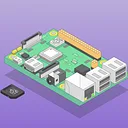
The Raspberry Pi Model B+ is an updated revision of the original Raspberry Pi Model B, featuring improved power supply design, more USB ports, expanded GPIO, and a more convenient microSD card slot — all in the same compact form factor.
Powered by the same Broadcom SoC running at 700 MHz with 512 MB RAM, the B+ is fully software-compatible with earlier models while offering significant hardware improvements for easier integration into projects and enclosures.
Key Improvements Over Model B
- 4 USB Ports – Double the connectivity (up from 2)
- 40-Pin GPIO Header – Expanded from 26 pins; first 26 pins retain the original layout
- Improved Power Supply – Dual buck converters with polarity protection, 2 A fuse, and hot-swap protection
- MicroSD Card Slot – Push-push socket replaces the full-size SD holder
- 4 Mounting Holes – Rectangular layout for secure enclosure mounting
- Composite Video Integrated – NTSC/PAL output via 4-pole 3.5 mm A/V jack
Specifications
- Processor – Broadcom SoC, 700 MHz (overclockable)
- RAM – 512 MB
- USB – 4× USB 2.0 ports
- GPIO – 40-pin header
- Video Output – HDMI, composite via 3.5 mm jack
- Audio Output – 3.5 mm jack (shared with composite video)
- Storage – MicroSD card slot
- Networking – 10/100 Ethernet
- Power – Micro USB, 5 V
- Dimensions – 85 × 56 mm
Ideal For
- Linux-based computing and programming projects
- Media centres and home servers
- Electronics prototyping with GPIO
- Educational computing
Resources
Jargon buster
Plain-language definitions for the technical terms used above.
- GPIO
- General-purpose input/output pins are microcontroller pins you can set in software to read signals, switch devices on and off, or connect to peripherals. The number of GPIO pins matters because it limits how many buttons, LEDs, sensors, and other parts you can wire directly to the board.
- HDMI
- HDMI is a common digital video and audio connection used by computers, media players, and many displays. If a display kit has HDMI input, it is usually much easier to test with a single-board computer because it can act like a normal monitor.
- Hot-swap
- Hot-swap (or hot-swapping) means connecting, disconnecting or replacing a component such as a power source, battery, drive or module while the rest of the system keeps running. It matters where equipment must stay operational without being powered down, and for power supplies it often needs extra circuitry to manage the inrush current or voltage dips that a swap can cause.
- microSD card
- A microSD card is a small removable flash memory card used to store data such as audio, images, logs or program files. Its capacity and formatting (often FAT32 or exFAT) affect how much can be stored and whether the card needs preparing before use.
- overclockable
- Overclockable means the processor can be run faster than its standard rated speed. This can increase performance, but it may also increase power use, heat, and the chance of instability, so it matters for projects pushing the board’s limits.
- RAM
- RAM (random-access memory) is fast, temporary memory a device uses for working data while it is running; in its common volatile form, its contents are lost when power is removed. Some devices offer a mode that applies settings to RAM only, which is handy for testing changes temporarily because they are not stored permanently and disappear at power-off.
- USB 2.0
- USB 2.0 is a widely used wired standard for carrying both data and power between a device and a computer or other compatible host, with data rates up to 480 Mbps. It indicates the kind of port a device uses and that it should work with most modern and many older computers.
Find this product in
Brands
Related Tutorials
Free step-by-step guides