SparkFun
SparkFun Arduino IoT Weather Station
Building a weather station can be rewarding whether you're an agriculturalist, professional meteorologist, or weather hobbyist. Create your own weather st...
Get notified when back in stock
- SparkFun MicroMod ESP32 Processor
- SparkFun MicroMod Weather Carrier Board w/o UV Sensor
- Weather Meter Kit
- SparkFun Soil Moisture Sensor (with Screw Terminals)
- Jumper Wires Premium 12" M/M Pack of 10
-
General Features:
- Dual-core Tensilica LX6 microprocessor
- Up to 240MHz clock frequency
- 520kB internal SRAM
- 128mbit/16MB flash storage
- Integrated 802.11 BGN WiFi transceiver
- 2.7 to 3.6V operating range
- 500µA sleep current under hibernation
- 10-electrode capacitive touch support
- Hardware accelerated encryption (AES, SHA2, ECC, RSA-4096)
-
Specific Peripherals made available on MicroMod ESP32:
- 1x USB dedicated for programming and debug
- 1x UART
- 2x I2C
- 1x SPI
- 7x GPIO
- 2x Digital Pins
- 2x Analog Pins
- 2x PWM
- Status LED
- VIN Level ADC
- *Additional peripherals are available but are shared on dedicated MicroMod pins.
- Barometric Pressure/Humidity/Temperature Sensor - BME280
- Operated in I2C mode. I2C address: 0x77
- Lightning Detector - AS3935
- Operated in SPI mode.
- 2 x RJ11 Connectors to connect Wind/Rain sensors.
- 3-pin Latch Terminal to connect Soil Moisture sensor.
- Wind Vane
- Cup Anemometer
- Tipping Bucket Rain Gauge
- Two-Part Mounting Mast
- Rain Gauge Mounting Arm
- Wind Meter Mounting Bar
- 2 x Mounting Clamps
- 4 x Zip Ties
- PCB Coated in ENIG (Electroless Nickel Immersion Gold)
- 3-Pin Screw Terminal (Pre-Assembled)
- General Information:
-
ESP32 Processor Board:
- Schematic
- Eagle Files
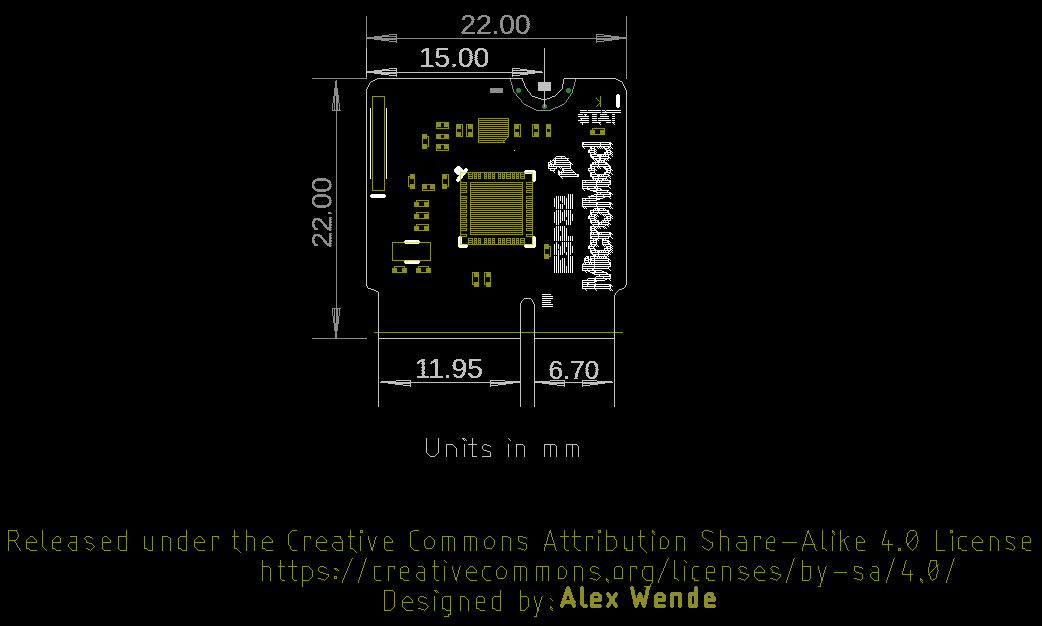
- Board Dimensions
- Hookup Guide
- Datasheet (ESP32-D0WDQ6-V3)
- Graphical Datasheet
- GitHub Hardware Repo
- ESP32 Documentation:
- Weather Carrier Board (w/o UV Sensor):
- Arduino Project Hub: Weather Station with Arduino Cloud
- SparkFun Blog Post: SparkFun HQ Weather Station
Jargon buster
Plain-language definitions for the technical terms used above.
- ADC
- An analogue-to-digital converter reads a changing voltage and turns it into a number the microcontroller can use. It matters when connecting analogue sensors such as light, sound, or variable-resistor sensors.
- ESP32
- ESP32 is a family of low-cost microcontroller chips and modules from Espressif with built-in WiFi and Bluetooth. They support programmable firmware and over-the-air updates, and are commonly programmed with toolchains such as the Arduino core and ESP-IDF.
- GPIO
- General-purpose input/output pins are microcontroller pins you can set in software to read signals, switch devices on and off, or connect to peripherals. The number of GPIO pins matters because it limits how many buttons, LEDs, sensors, and other parts you can wire directly to the board.
- I2C
- I2C is a two-wire communication bus used by many sensors and small modules. It matters because several I2C devices can share the same two wires, but each device needs a compatible address and your controller must support I2C.
- I2C address
- An I2C address is the number a device uses so a microcontroller can tell it apart from other devices on the same I2C bus. It matters because two devices with the same fixed address may conflict if used together.
- IoT
- Short for Internet of Things, meaning physical devices that connect to networks or the internet to send data or be controlled remotely. It matters if you want projects such as connected sensors, remote controls or classroom data-logging activities.
- LED
- A light-emitting diode (LED) is a small electronic component that emits light when current flows through it in the correct direction. Because it only conducts one way, its polarity matters, and a through-hole LED must be soldered the correct way around to light up.
- M.2
- M.2 is a compact edge-connector standard for plugging small modules - such as SSDs, wireless cards or microcontroller modules - into a host board without soldering. The same slot shape can carry different interfaces (for example PCIe, SATA or USB), so keying and the supported module type need to be checked.
- microcontroller
- A microcontroller is a small computer on a single chip that runs a stored program and controls connected inputs and outputs such as buttons, sensors, displays and communication interfaces. In a device built around one, it is the part that executes the code and coordinates the device's behaviour.
- MicroMod
- MicroMod is a modular board system where a small processor board plugs into a separate carrier board (via an M.2 connector) that provides connectors, power, and peripherals. Within the MicroMod system, a board is either a processor board or a carrier board, and you need a matching pair of both before you can run project code.
- microSD card
- A microSD card is a small removable flash memory card used to store data such as audio, images, logs or program files. Its capacity and formatting (often FAT32 or exFAT) affect how much can be stored and whether the card needs preparing before use.
- PCB
- A printed circuit board (PCB) is a board, usually rigid, with etched copper tracks that connect electronic components together without loose wiring. Components are mounted on the board and signals route between them through the copper layout.
- PWM
- Pulse Width Modulation is a way for a digital pin to simulate variable output power by switching on and off very quickly. It matters for controlling things like LED brightness, motor speed, or servo-style signals from a microcontroller pin.
- screw terminal
- A connector that clamps bare wire using a small screw, making it easier to attach and remove wires without soldering. Screw terminals are useful for power wiring or thicker wires that are not suited to small plug-in connectors.
- SPI
- A fast serial communication bus often used for displays, memory cards, and sensors. It matters because SPI devices need specific pins for clock and data, plus a separate chip-select line for each device.
- SRAM
- Fast temporary memory used by a processor while a program is running. More SRAM helps with projects that handle larger data buffers, networking, displays, or more complex code.
- UART
- UART is a simple asynchronous serial interface that sends data over separate transmit and receive wires, usually labelled TX and RX, with both ends set to the same baud rate. It is a common way for microcontrollers and other serial devices to exchange data.
Find this product in
Connectivity
Sensors & Input
STEM & Education
Weather Meter Datasheet
Datasheet · 310.4 KB · Click any page to view full size
MicroMod Interface Pinout
Pinout · 27.5 KB · Click any page to view full size
MicroMod Interface Pin Descriptions
Pinout · 58.2 KB · Click any page to view full size
MicroMod ESP32 Schematic
Schematic · 128.6 KB · Click any page to view full size
ESP32 Datasheet
Datasheet · 817.9 KB · Click any page to view full size
MicroMod ESP32 Graphical Datasheet
Datasheet · 1.3 MB · Click any page to view full size
MicroMod Weather Carrier Schematic
Schematic · 132.7 KB · Click any page to view full size
BME280 Datasheet
Datasheet · 1.5 MB · Click any page to view full size
AS3935 Datasheet
Datasheet · 1.0 MB · Click any page to view full size
Soil Moisture Sensor Schematic
Schematic · 94.1 KB · Click any page to view full size
Supplier page — sparkfun.com
Supplier Description · 812.7 KB · Click any page to view full size
Weather Sensor Assembly Updated
Document · 280.1 KB · Click any page to view full size
MicroMod General Pinout v10 Graphical Datasheet
Datasheet · 984.8 KB · Click any page to view full size
MicroMod M.2 Connector Datasheet TE 2199230 4
Datasheet · 336.1 KB · Click any page to view full size
MicroMod Reflowable Standoff
Datasheet · 1.2 MB · Click any page to view full size
veml6075
Datasheet · 453.8 KB · Click any page to view full size
Resources & Downloads
Guides, code examples, and more
MicroMod ESP32 Eagle Files
Schematic · ZIP · 143.7 KB
Eagle PCB design files for the MicroMod ESP32 board
MicroMod Weather Carrier Eagle Files
Schematic · ZIP · 275.6 KB
Eagle PCB design files for the MicroMod Weather carrier board
Soil Moisture Sensor Eagle Files
Schematic · ZIP · 111.5 KB
Eagle PCB design files for the soil moisture sensor
master
Example Code · ZIP · 42.4 KB
Source Code
Open-source libraries, firmware & example projects for this product
783ea26
about 3 years ago
· 85 commits
- Examples Update library and pins about 3 years ago
- Hardware Update names almost 6 years ago
- Production Implemented SPI bus changes about 6 years ago
- .gitignore Create .gitignore over 6 years ago
- LICENSE.md Add license over 3 years ago
- README.md Update README.md almost 6 years ago
ed0488b
over 1 year ago
· 47 commits
- documents Add datasheet over 3 years ago
- examples Example1: Fixed excessive memory consumption almost 3 years ago
- src Fix ESP32 check. Addresses #8 over 1 year ago
- CONTRIBUTING.md Create README and CONTRIBUTING over 3 years ago
- keywords.txt Create keywords.txt over 3 years ago
- library.properties Bump version to v1.1.2 over 1 year ago
- LICENSE.md Update LICENSE.md over 3 years ago
- README.md Create README and CONTRIBUTING over 3 years ago
0faa048
over 3 years ago
· 30 commits
- Documentation Update esp32_datasheet_en.pdf over 3 years ago
- Hardware v11 updated inner layers about 6 years ago
- Production v11 Panel about 6 years ago
- .gitattributes intial commit over 6 years ago
- .gitignore intial commit over 6 years ago
- CONTRIBUTING.md intial commit over 6 years ago
- ISSUE_TEMPLATE.md intial commit over 6 years ago
- LICENSE.md intial commit over 6 years ago
- README.md Update README.md over 3 years ago
An Arduino library to control the BME280 humidity and pressure sensor.
870c17d
about 1 year ago
· 77 commits
- .github Create add_issue_to_project.yml about 3 years ago
- examples Change examples to 115200bps to match style guide almost 6 years ago
- src Number of changes along with an accidental format changes, rolls version about 1 year ago
- keywords.txt Comment changes to examples over 8 years ago
- library.properties Number of changes along with an accidental format changes, rolls version about 1 year ago
- LICENSE.md initial commit and beta release about 11 years ago
- README.md Update README.md almost 6 years ago
A simple breakout to aid in the measuring of moisture in soil and similar materials.
f4d72d9
almost 3 years ago
· 13 commits
- Hardware Added Locking 3-pin 3.5mm footprint over 11 years ago
- Production Adding license file, updating README, cleaning up repo structure about 11 years ago
- .gitattributes Adding license file, updating README, cleaning up repo structure about 11 years ago
- .gitignore Initial commit over 11 years ago
- LICENSE.md Adding license file, updating README, cleaning up repo structure about 11 years ago
- README.md Update README.md almost 3 years ago
39ce190
over 2 years ago
· 56 commits
- .github Adds workflow, fix to xor check, formats header file about 3 years ago
- Documents Removes some unecessary checks, comments out reset in examples, rolls about 3 years ago
- examples Removes some unecessary checks, comments out reset in examples, rolls about 3 years ago
- src Remove a Serial.println. over 2 years ago
- .gitignore Initial commit - Copy from SparkX repo over 7 years ago
- ISSUE_TEMPLATE.md Adds Creative commons license and issue template about 7 years ago
- keywords.txt Adds so many features about 7 years ago
- library.properties Removes old SPISettings check as ESP has changed this behavior since, also adds semicolon to return statment over 2 years ago
- LICENSE.md Adds Creative commons license and issue template about 7 years ago
- README.md Updates Readme about 7 years ago
Related Tutorials
Free step-by-step guides