SparkFun
SparkFun gator:soil - micro:bit Accessory Board
All Products
Humidity Sensors
New Arrivals
Sensors
SparkFun
Water & Liquid Sensors
micro:bit
Sensors & Modules
Education
Micro:bit Sensors and Modules
Sensors & Input
$14.15
|
In stock
If your plants could talk, would they call out "Water me, Seymour?" Unfortunately (or fortunately, perhaps) plants have yet to develop the ability to speak. ...
Get notified when back in stock
Estimated Delivery
Arrives
Order now — ships Mon 26 Oct
Disclaimer
Secure checkout
If your plants could talk, would they call out "Water me, Seymour?" Unfortunately (or fortunately, perhaps) plants have yet to develop the ability to speak. But thanks to the SparkFun gator:soil micro:bit Accessory Board, you can now measure the moisture level in soil without any vocal clamoring from your leafy lads. And, best of all--it is part of
SparkFun's gator:bit series of alligator-clippable accessories, meaning you can easily interface it with the micro:bit or other microcontrollers!
SparkFun's gator:bit series of alligator-clippable accessories, meaning you can easily interface it with the micro:bit or other microcontrollers!
The gator:soil consists of two probes and three pads (PWR, GND, and SIG). The probes are used to measure the conductivity of the soil. SIG provides an analog voltage out that can be attached to an ADC pad on the gator:bit (v2). The value read on SIG is dependent on a few variable, including soil composition, contact on the probes, soil compaction, and other factors. In most cases, it will behoove you to calibrate your sensor reading for each soil sample and sensor. Once calibrated, for a fixed sensor, the primary variables to measuring conductivity in the soil will be the power input and moisture content of the soil.
We recommend powering the gator:soil with between 3.3V - 5V. Again, please note that the analog value returned will vary depending on what voltage is provided for the sensor. For use with the gator:bit (v2) and micro:bit, you should provide 3.3V through the PWR and GND pads. We recommend not powering the sensor constantly to reduce corrosion of the probes; this can be controlled through one of the digital pins of the gator:bit (v2).
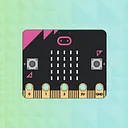
The micro:bit is a pocket-sized computer that lets you get creative with digital technology. Between the micro:bit and our shield-like bit boards you can do almost anything while coding, customizing and controlling your micro:bit from almost anywhere! You can use your micro:bit for all sorts of unique creations, from robots to musical instruments and more. At half the size of a credit card, this versatile board has vast potential!
Jargon buster
Plain-language definitions for the technical terms used above.
- ADC
- An analogue-to-digital converter reads a changing voltage and turns it into a number the microcontroller can use. It matters when connecting analogue sensors such as light, sound, or variable-resistor sensors.
- GND
- GND is the ground or reference connection (0 V) for a circuit. When connecting two devices together, their grounds must be joined so both agree on what counts as a low or high signal.
- Shield
- An add-on board that plugs into a main controller board to give it extra features such as sensing, motor control or communication. Knowing a product supports shields helps you judge whether it can connect neatly into an existing maker-board setup.
Find this product in
Sensors & Input
Related Tutorials
Free step-by-step guides