SparkFun
Hobby Gearmotor - 140 RPM, Male Connectors (Single)
A compact hobby gearmotor from DAGU with a 48:1 gearbox ratio and 140 RPM unloaded speed. Features a 9mm output shaft on a straight axis with male connectors...
Get notified when back in stock
A compact hobby gearmotor from DAGU with a 48:1 gearbox ratio and 140 RPM unloaded speed. Features a 9mm output shaft on a straight axis with male connectors for easy wiring. A reliable, affordable option for small robotics and wheeled projects.
Runs on 4.5VDC with a no-load current of 190mA — well suited for battery-powered robots and chassis like the Shadow Chassis.
Specifications
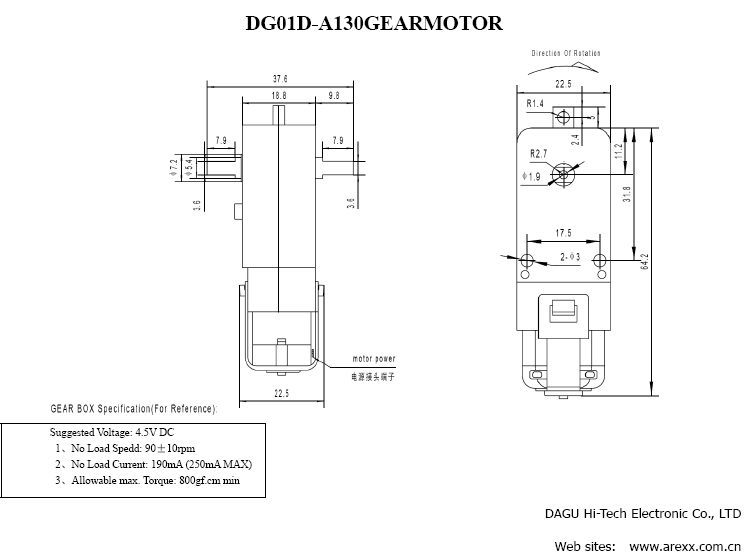
- Suggested Voltage: 4.5VDC
- No-Load Speed: 140 RPM
- No-Load Current: 190mA
- Max Load Current: 250mA
- Torque: 800 gf·cm
- Gearbox Ratio: 48:1
- Output Shaft Length: 9mm (straight axis)
- Connectors: Male
Ideal For
- Small wheeled robots and chassis
- Hobby robotics projects
- Arduino and microcontroller motor experiments
Package Contents
- 1× Hobby Gearmotor (140 RPM, male connectors)
Resources
Find this product in
Brands
Robotics & Motion
Supplier page — sparkfun.com
Supplier Description · 394.0 KB · Click any page to view full size
You might also like
Customers who bought this also bought
Temperature Sensor - TMP36
$3.55
L9110H H-Bridge Motor Driver for DC Motors - 8 DIP - 2.5V-12V 800mAh
$3.25
3xAA Battery Holder
$2.15
DHT11 Temperature and Humidity Sensor Module
$7.95
Hobby Motor - Gear
$5.55
Panel Mount 10K Log Potentiometer (Breadboard Friendly) [10K Log]
$2.10
I2C 16x2(1602) LCD Display for Arduno
$18.85
Micro Servo 9g
$5.50

Jargon buster
Plain-language definitions for the technical terms in the product description.
- microcontroller
- A microcontroller is a small computer on a single chip that runs a stored program and controls connected inputs and outputs such as buttons, sensors, displays and communication interfaces. In a device built around one, it is the part that executes the code and coordinates the device's behaviour.
- Torque
- A twisting force that causes something to rotate, usually measured in newton-metres or kilogram-centimetres. It matters when choosing motors, servos, gears, and tools because higher torque is needed to lift heavier loads, turn larger wheels, or move mechanisms without stalling.