Pimoroni
26-pin GPIO Cable for Raspberry Pi Model A/B - Black / 150mm
All Products
New Arrivals
Raspberry Pi
Raspberry Pi Cables
Jumpers & Wires
Raspberry Pi Accessories
Prototyping & Wiring
$8.55
|
Out of stock
A 26-pin (2×13) GPIO ribbon cable for connecting the original Raspberry Pi Model A or Model B to breakout boards, breadboards, and other PCBs. Pin 1 is marke...
Get notified when back in stock
Estimated Delivery
Arrives
Disclaimer
Secure checkout
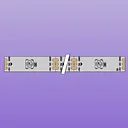
A 26-pin (2×13) GPIO ribbon cable for connecting the original Raspberry Pi Model A or Model B to breakout boards, breadboards, and other PCBs. Pin 1 is marked with a red wire for easy orientation.
Note: This cable is only compatible with the original Raspberry Pi Model A and Model B (26-pin GPIO header). All later models (A+, B+, Pi 2, Pi 3, Pi 4, Pi 5) use a 40-pin header and are not compatible with this cable.
Key Features
- 26-Pin (2×13) Connector – Matches the original Raspberry Pi GPIO header
- 150mm Length – Provides reach for connecting to external boards
- Pin 1 Marked – Red wire identifies pin 1 for correct orientation
- IDC Socket Connectors – Plugs directly onto the Pi's GPIO header
Ideal For
- Breaking out GPIO pins to a breadboard or PCB
- Raspberry Pi Model A/B projects
- Accessing I2C, SPI, and digital I/O pins
Package Contents
- 1× 26-Pin GPIO Ribbon Cable (150mm, black)
Jargon buster
Plain-language definitions for the technical terms used above.
- breakout
- A breakout board carries a small or fine-pitched component and brings its connections out to standard, breadboard- and header-friendly pins. Describing a part as a breakout means it can be wired into a project without soldering directly to the component's tiny contacts.
- GPIO
- General-purpose input/output pins are microcontroller pins you can set in software to read signals, switch devices on and off, or connect to peripherals. The number of GPIO pins matters because it limits how many buttons, LEDs, sensors, and other parts you can wire directly to the board.
- I2C
- I2C is a two-wire communication bus used by many sensors and small modules. It matters because several I2C devices can share the same two wires, but each device needs a compatible address and your controller must support I2C.
- PCB
- A printed circuit board (PCB) is a board, usually rigid, with etched copper tracks that connect electronic components together without loose wiring. Components are mounted on the board and signals route between them through the copper layout.
- SPI
- A fast serial communication bus often used for displays, memory cards, and sensors. It matters because SPI devices need specific pins for clock and data, plus a separate chip-select line for each device.
Find this product in
Raspberry Pi
Related Tutorials
Free step-by-step guides