SparkFun
SparkFun Micro 6DoF IMU - ISM330DHCX (Qwiic)
The SparkFun Qwiic Micro ISM330DHCX Six Degrees of Freedom IMU is a micro-sized 0.75in. by 0.30in. sensor featuring STMicroelectronics' ISM330DHCX; a high-pe...
Get notified when back in stock
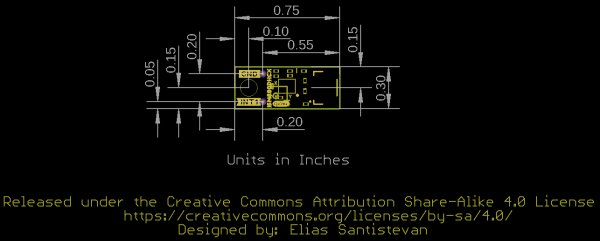
- Qwiic Micro Sized Board (0.75in x 0.30in / 19.05mm x 7.62mm)
- 1.71V to 3.6V supply voltage
- ±2/±4/±8/±16g 3D accelerometer with selectable full scale
- ±125/±250/±500/±1000/±2000/±4000dps 3D gyroscope with extended selectable full scale
- Temperature range: -40 to +105°C
- Embedded compensation for high stability over temperature
- Auxiliary SPI serial interface for data output of gyroscope and accelerometer (OIS and other stabilization applications)
- Six-channel synchronized output
- Sensor hub feature to collect data from additional external sensors
- Embedded smart FIFO up to 9kB
- Programmable Finite State Machine to process data from accelerometer, gyroscope, and external sensors
- Machine Learning Core
- Smart embedded functions and interrupts: tilt detection, free-fall, wakeup, 6D/4D orientation, click and double-click
- Embedded pedometer, step detector and counter
- Embedded temperature sensor
- I2C Address: 0x6B (Default), 0x6A (Alternate)
- 1x Horizontal Qwiic Connection Port
- Schematic
- Eagle Files
- Board Dimensions
- Hookup Guide
- Datasheet (ISM330DHCX)
- Qwiic Info Page
- Arduino Library
- GitHub Hardware Repo
Jargon buster
Plain-language definitions for the technical terms used above.
- breakout
- A breakout board carries a small or fine-pitched component and brings its connections out to standard, breadboard- and header-friendly pins. Describing a part as a breakout means it can be wired into a project without soldering directly to the component's tiny contacts.
- Daisy chain
- A wiring layout where devices are connected one after another in a line. It matters because long or awkward chains can make projects messy or less convenient, while a hub lets several devices branch out from one point.
- FIFO
- FIFO stands for "first in, first out", a way of handling stored items so the oldest one is read out first, like a queue. In electronics a FIFO is usually a small buffer that temporarily holds data, such as sensor samples or serial bytes, so a processor can collect it in batches instead of reading continuously.
- Gyroscope
- A gyroscope measures rotation, such as how fast a board is turning around its X, Y, and Z axes. This matters for projects like gesture controls, balancing robots, and motion tracking where tilt or rotation changes need to be detected.
- I2C
- I2C is a two-wire communication bus used by many sensors and small modules. It matters because several I2C devices can share the same two wires, but each device needs a compatible address and your controller must support I2C.
- I2C address
- An I2C address is the number a device uses so a microcontroller can tell it apart from other devices on the same I2C bus. It matters because two devices with the same fixed address may conflict if used together.
- IMU
- An IMU (Inertial Measurement Unit) combines motion sensors, typically an accelerometer and gyroscope and sometimes a magnetometer, to measure movement and orientation. It can sense motion, tilt, vibration, rotation, and changes in direction, which is useful for tasks such as navigation, stabilisation, gesture detection, and asset tracking.
- PCB
- A printed circuit board (PCB) is a board, usually rigid, with etched copper tracks that connect electronic components together without loose wiring. Components are mounted on the board and signals route between them through the copper layout.
- Qwiic
- Qwiic is a plug-in connector system for I2C devices that uses small 4-pin cables, so you can connect compatible sensors without soldering. It matters because your controller or adapter also needs Qwiic, or you will need a cable or breakout to wire it up.
- SPI
- A fast serial communication bus often used for displays, memory cards, and sensors. It matters because SPI devices need specific pins for clock and data, plus a separate chip-select line for each device.
Find this product in
Sensors & Input
SparkFun Micro 6DoF IMU ISM330DHCX Schematic
Schematic · 141.9 KB · Click any page to view full size
ISM330DHCX Datasheet
Datasheet · 2.5 MB · Click any page to view full size
Supplier page — sparkfun.com
Supplier Description · 551.2 KB · Click any page to view full size
SparkFun 6DoF ISM330DHCX Schematic
Schematic · 101.4 KB · Click any page to view full size
Resources & Downloads
Guides, code examples, and more
Source Code
Open-source libraries, firmware & example projects for this product
f848874
about 4 years ago
· 53 commits
- Documentation Moves CS to top of symbol, moves VDD_IO to make space for SDA pin over 4 years ago
- Hardware Renames production files to include version number, updates 0402 RED LED with one that has PROD_ID over 4 years ago
- Production Renames production files to include version number, updates 0402 RED LED with one that has PROD_ID over 4 years ago
- License.md Create License.md over 4 years ago
- README.md Update README.md about 4 years ago
31c9ca3
about 2 years ago
· 118 commits
- .github Adds two new functions, accidentally formats files - would have done this separately about 2 years ago
- Documentation Adds documentation and many functions over 4 years ago
- examples Create example5_faster_I2C.ino almost 4 years ago
- src Adds two new functions, accidentally formats files - would have done this separately about 2 years ago
- keywords.txt Adds keywords over 4 years ago
- library.properties Correct setAccelSlopeFilter over 3 years ago
- License.md Create License.md over 4 years ago
- README.md Update README.md about 4 years ago