

DFRobot
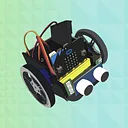
micro:Maqueen Lite with micro:bit V2, Skin, Mechanic, Cable, Gamepad and Track Map
·
This classroom-friendly kit bundles DFRobot’s Maqueen Lite robot platform with a micro:bit V2 and a stack of accessories for hands-on STEAM learning. It is d...
Get notified when back in stock
This classroom-friendly kit bundles DFRobot’s Maqueen Lite robot platform with a micro:bit V2 and a stack of accessories for hands-on STEAM learning. It is designed for students aged 8+ to explore graphical programming, robotics, sensors and logical thinking through a small, easy-to-use robot.
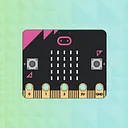
The kit includes the micro:Maqueen Lite robot, micro:bit V2, Type-C & Micro 2-in-1 USB cable, blue Maqueen Lite skin pack, micro:GamePad, track map, and four micro:Maqueen Mechanic add-ons: Forklift, Push, Beetle and Loader. Each product is supplied in its own packaging, and batteries are not included.
Maqueen Lite works with MakeCode and the Mind+ programming platform from DFRobot. Supporting resources include the Maqueen Lite Wiki, Maqueen4.1 MakeCode tutorial, Silly-Maqueen MakeCode and MindPlus materials, and MicroPython documentation.
The robot base breaks out line patrol sensing, ambient lighting, LED lights, an ultrasonic interface, buzzer, I2C interface, Gravity extension ports and mechanical expansion screw holes, making it a flexible starting point for coding, driving and add-on mechanism projects.
Features:
- Programming support: Support for Makecode, will support Scratch and python later.
- Compact movement: Small size, flexible movement.
- Gear motors: All-metal miniature gear motor, good quality, strong driving force.
- Expandable functions: Line patrol, ambient light, LED lights, ultrasonic interface, buzzer, I2C interface, mechanical expansion screw hole, etc. ... full-featured, highly expandable.
- Bearing wheel: Exclusive customized POM bearing wheel, flexible and reliable, strong obstacle crossing ability.
- Ease of use: Easy to install, easy to use.
Specifications:
- Supply Voltage: 3.5V~5V DC ( Three AAA batteries or 3.6V~3.7V lithium battery )
- Infrared Grayscale Sensor(High-low level): x 2
- Buzzer: x 1
- Infrared Receiver (NEC decoder): x 1
- LED Lights (High-low level control): x 2
- RGB Ambient Light (16 million colors): x 4
- SR04, SR04P Ultrasonic Interface(5V): x 1
- I2C Interface (5V): x 1
- Gravity Extension Interfaces (P0, P1, P2): x 3
- N20 All-metal Gear Motor: x 2
- Motor Drive Mode: PWM motor drive
- Bracket and Protective Cover Extension M3 Screw Hole: x 6
- Programming Method: Makecode graphical programming, Mind+ graphical programming
- Dimension: 81mm x 85 mm x 44mm/3.19 x 3.35 x 1.73in
A solid all-in-one starter kit for micro:bit robotics classes, coding clubs, line-following activities and mechanism experiments.
Jargon buster
Plain-language definitions for the technical terms used above.
- DC
- DC means direct current, where electricity flows in one constant direction, as supplied by batteries, USB ports and many plug-pack power supplies. When a product specifies DC, it runs from a DC supply rather than mains AC, so you need to provide the correct voltage and polarity.
- Gravity
- Gravity is DFRobot’s plug-in connector system for sensors, motors and modules, using standard cables to reduce loose jumper wiring. It matters because Gravity-compatible parts can connect directly to these ports, while non-Gravity parts may need adapters or manual wiring.
- I2C
- I2C is a two-wire communication bus used by many sensors and small modules. It matters because several I2C devices can share the same two wires, but each device needs a compatible address and your controller must support I2C.
- LED
- A light-emitting diode (LED) is a small electronic component that emits light when current flows through it in the correct direction. Because it only conducts one way, its polarity matters, and a through-hole LED must be soldered the correct way around to light up.
- MicroPython
- A version of the Python programming language made to run on microcontrollers. It matters because it lets beginners write readable code to control LEDs, sensors, motors and displays without needing to start with lower-level languages.
- PWM
- Pulse Width Modulation is a way for a digital pin to simulate variable output power by switching on and off very quickly. It matters for controlling things like LED brightness, motor speed, or servo-style signals from a microcontroller pin.
- RGB
- Short for red, green and blue, the three primary colours of light that are mixed in varying amounts to make a wide range of colours. In electronics RGB can refer to an LED or pixel that blends these three colours, or to a colour signal or interface that carries separate red, green and blue channels.
- Type-C
- USB Type-C (USB-C) is a small, reversible USB connector used for charging, power, and data transfer on many modern devices. A Type-C port or plug indicates the cable and charger connection needed to power, charge, or communicate with a device.
Find this product in
Robotics & Motion
Crazy Maqueen Tutorial (English)
User Guide · 9.0 MB · Click any page to view full size
Maqueen Lite CE Certificate
Compliance · 143.2 KB · Click any page to view full size
Maqueen Lite FCC Certificate
Compliance · 138.6 KB · Click any page to view full size
Resources & Downloads
Guides, code examples, and more
Source Code
Open-source libraries, firmware & example projects for this product
Related Tutorials
Free step-by-step guides
Featured in buying guides
Comparison guides this product appears in

