AI agents & screen readers: for a machine-readable, text-only catalogue,
start at /llms.txt.
Products are available as Markdown
(/products.md, /products/{handle}.md)
and JSON
(/products.json, /products/{handle}.json).
The Starter Kit for Arduino is an excellent kit for whom want to learn more about Arduino. This kit include display part, 5 kinds of sensors (vibration se...
The Starter Kit for Arduino is an excellent kit for whom want to learn more about Arduino. This kit include display part, 5 kinds of sensors (vibration sensor, touch sensor, flame sensor, DHT11 Temperature and humidity sensor, soil miosture sensor), DC motor with male Dupont Wire + fan blade and servo. We have perfect technology support, which include 24 teaching lessons, and 4 project examples, such as color dimmer, traffic light, intelligent fire and theremin. With this kit you can DIY some little things you like, which can creat your imagination. This kit does not include Arduino board.
This kit is suitable for the starter of Arduino, such as who has weak foundation of Arduinio and have not contacted with Arduino. It also can be used in the school's interest training courses to allow more students learn about Arduino.
Features
Unleash your creativity, let the idea shine
Make fun by your hand, with family or friends
Ease of use, clear tutorials and online support
33 kinds of modules and sensors, 24 lessons for Arduino
Specifications
Weight:395 g
Size:20cm(L) x 14cm(W) x 4.5cm(H)
Package list
Breadboard x 1
65 Jumper Wire x 1
Female-to-male Dupont Wire x 10
Resistor (220R) x 10
Resistor (330R) x 10
Resistor (1K) x 10
Resistor (10K) x 10
Yellow LED x 4
Blue LED x 4
Green LED x 4
Red LED x 4
Button (big) x 4
Button cap x 4
Active Buzzer x 1
Passive Buzzer x 1
RGB LED(common cathode) x 1
1 digit 7-segment Display(common cathode) x 1
4 digit 7-segment Display (common anode) x 1
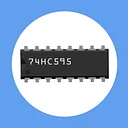
IC 74HC595 x 1
LCD1602 Module x 1
5V relay x 1
Vibration Sensor x 2
Photoresistor x 1
Flame sensor x 1
Thermistor x 1
DHT11 Temperature and humidity sensor x 1
Touch sensor x 1
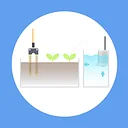
Soil moisture sensor x 1
HC-SR04 module x 1
9G servo x 1
DC motor with male Dupont Wire + fan blade x 1
IC L293D x 1
Potentiometer(10K)x 3
** please note, CD no longer included. All the info can be grabbed from below
Plain-language definitions for the technical terms used above.
DC
DC means direct current, where electricity flows in one constant direction, as supplied by batteries, USB ports and many plug-pack power supplies. When a product specifies DC, it runs from a DC supply rather than mains AC, so you need to provide the correct voltage and polarity.
LED
A light-emitting diode (LED) is a small electronic component that emits light when current flows through it in the correct direction. Because it only conducts one way, its polarity matters, and a through-hole LED must be soldered the correct way around to light up.
photocell
A light-sensitive component whose electrical resistance changes with the amount of light falling on it. It matters when choosing or using light sensors, automatic lights, or brightness-detecting circuits because its response speed, resistance range, and sensitivity affect how reliably it detects light levels.
potentiometer
A variable resistor usually turned with a knob or shaft to create an adjustable electrical signal. It is often used for inputs such as volume, brightness or position, so it helps beginners learn how a microcontroller reads changing values.
RGB
Short for red, green and blue, the three primary colours of light that are mixed in varying amounts to make a wide range of colours. In electronics RGB can refer to an LED or pixel that blends these three colours, or to a colour signal or interface that carries separate red, green and blue channels.
servo
A servo is a motor with built-in position control, usually told to move to a specific angle by a control signal. It matters when you need repeatable movement, such as steering, arms, flaps, or linkages, rather than continuous spinning.
No reviews yet
Be the first to review this one.
Bought this? Tell people what you think
You don't need an account.
Questions & answers
No questions yet. If something isn't clear from the description, ask — the answer goes on this page for everyone who wonders the same thing.
j / ↓Move selection downk / ↑Move selection upgJump to first itemGJump to last itemaAdd selected to cartoOpen in new browser tabuToggle unavailable productsBackspaceRemove 1 qty (cart tab)XClear entire cartcCheckout/Search productsEscBack / cancel / close:Command mode?Toggle this help1-3Switch tabs