

Adafruit
Continuous Rotation Micro Servo [FS90R]
·
Need to make a tiny robot? This little micro servo rotates 360 degrees fully forward or backwards, instead of moving to a single position. You can use a...
Get notified when back in stock
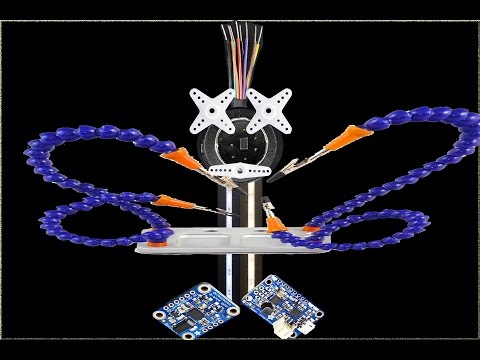
Need to make a tiny robot? This little micro servo rotates 360 degrees fully forward or backwards, instead of moving to a single position. You can use any servo code, hardware or library to control these servos. Good for making simple moving robots. Comes with five horns and attachment screws, as shown.
Good for beginners who want to make stuff move without building a motor controller with feedback & gear box, especially since it will fit in small places. Of course, its not nearly as strong as a standard servo. Works great with the Motor Shield for Arduino, our 16-channel Servo Driver, or by just wiring up with the Servo library.
To control with an Arduino, we suggest connecting the orange control wire to pin 9 or 10 and using the Servo library included with the Arduino IDE (see here for an example sketch). Position "90" (1.5ms pulse) is stop, "180" (2ms pulse) is full speed forward, "0" (1ms pulse) is full speed backwards. They may require some simple calibration, simply tell the servo to 'stop' and then gently adjust the potentiometer in the recessed hole with a small screwdriver until the servo stops moving.
Jargon buster
Plain-language definitions for the technical terms used above.
- IDE
- Short for Integrated Development Environment, a program used to write, run and manage code. It matters because some learners prefer a traditional coding workspace instead of a guided notebook-style lesson.
- potentiometer
- A variable resistor usually turned with a knob or shaft to create an adjustable electrical signal. It is often used for inputs such as volume, brightness or position, so it helps beginners learn how a microcontroller reads changing values.
- servo
- A servo is a motor with built-in position control, usually told to move to a specific angle by a control signal. It matters when you need repeatable movement, such as steering, arms, flaps, or linkages, rather than continuous spinning.
- Shield
- An add-on board that plugs into a main controller board to give it extra features such as sensing, motor control or communication. Knowing a product supports shields helps you judge whether it can connect neatly into an existing maker-board setup.
Find this product in
Brands
Robotics & Motion
Related Tutorials
Free step-by-step guides




