Little Bird
BBC micro:bit
All Products
New Arrivals
Classroom Starter Kits for Micro:Bit
Microcontrollers & Development Boards
micro:bit
Micro:bit Boards
Education
STEM Education Kits
$36.20
|
Out of stock
The British Invasion is here! No, not music...microcontrollers! New to Australia is the newest and easiest way to learn programming and electronics - the BBC...
Get notified when back in stock
Estimated Delivery
Arrives
Disclaimer
Secure checkout
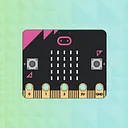
The British Invasion is here! No, not music...microcontrollers! New to Australia is the newest and easiest way to learn programming and electronics - the BBC micro:bit.
Designed specifically for kids and beginners, the micro:bit is a pocket-sized computer that you can code, customize and control to bring your digital ideas, games and apps to life. It’s a small, code-able device that is a non-intimidating introduction to programming and making – switch on, program it to do something fun – wear it, customize it, develop new ideas.
The micro:bit platform combines the 'bit, a pocket-sized coding device featuring several sensors and LEDs, with an awesome website full of coding examples and projects. Start out with the video tutorials, then check out the ideas page to get creative. From making your own games to taking selfies, the possibilities are endless!
This is an individual micro:bit with no batteries or cables. For the popular micro:bit Go Bundle which includes batteries, battery holder, and USB cable, click here.
The micro:bit is based off of the nRF51822 microcontroller, which has built in Bluetooth LE radio. There are two programmable buttons that can be used to control games, send a radio message, activate the display, etc. The micro:bit can detect motion (using an accelerometer) and tell you which direction you are heading in (using a magnetometer/compass chip). On the bottom is an expansion port, with 5 alligator-clip friendly pads and additional card-edge contacts for 19 total I/O pins. Each of these sensors, inputs, and outputs, is completely programmable via easy-to-use software that can be accessed from a PC, laptop, tablet, or mobile. You can use MakeCode/PXT blocks or micro Python to start your programming adventure. Advanced programmers can graduate to mbed for super-powerful C or C++ programming.
If you’re new to coding and hardware, then the micro:bit is a great place to start. It’s incredibly easy to use and a perfect platform to help you leapfrog onto other microcontrollers and computers such as Circuit Playground, Arduino, Feather, or even Raspberry Pi. If you're looking for a slightly bigger head start, check out the micro:bit Go Bundle, which includes some AAA batteries + holder and a micro USB cable.
For more information, visit http://microbit.org/
- To get a query looked at by micro:bit support engineers: http://support.microbit.org/
- For technical info and to try and find the answer: http://tech.microbit.org/
- To access a vibrant community of enthusiasts: http://tech.microbit.org/get-involved/where-to-find/
Product Weight: 9.0g / 0.3oz
Jargon buster
Plain-language definitions for the technical terms used above.
- magnetometer
- A sensor that measures magnetic fields, often used to work out compass direction. It matters because nearby magnets, motors, or metal objects can affect readings and may require calibration.
- microcontroller
- A microcontroller is a small computer on a single chip that runs a stored program and controls connected inputs and outputs such as buttons, sensors, displays and communication interfaces. In a device built around one, it is the part that executes the code and coordinates the device's behaviour.
Find this product in
STEM & Education
Related Tutorials
Free step-by-step guides