Little Bird
Wireless Plasma Kit (Pico W Aboard) Bring Your Own Bottle
All Products
New Arrivals
DIY Project Kits
Raspberry Pi
Brands and Manufacturers
Raspberry Pi Pico
Pico
STEM & Education
Education
Wireless & Connectivity
Prototyping & Wiring
Raspberry Pi Microcontrollers
Pimoroni
STEM Education Kits
$76.20
|
In stock
A beginner friendly, internet connected mood-light-in-a-bottle that's easy to program using MicroPython or CircuitPython. A cutting edge fusion of Raspberry...
Get notified when back in stock
Estimated Delivery
Arrives
Order within 5h 30m for same-day dispatch
Disclaimer
Secure checkout
A beginner friendly, internet connected mood-light-in-a-bottle that's easy to program using MicroPython or CircuitPython.
A cutting edge fusion of Raspberry Pi Pico W, addressable LEDs and Pirate Glass(TM) technology - this kit contains everything you'll need to build a fully programmable RGB LED light (or as we like to call it around here, arrrrrrrrRGB). Because the 50 LEDs are addressable, you can control the colour and brightness of each one individually!
Here are some things you could do with it:
🌈 Set it to show different colours and effects appropriate for your season, event, mood or whim.
🌍 Connect to your favourite APIs and get it to show you different effects for different weather conditions, switch the light on at sunset or let you know when the International Space Station is overhead.
🐦 Use a service like IFTTT to trigger effects based on Twitter shenanigans, calendar entries or home automation events.
Powered by Plasma Stick 2040 W ⚡
Plasma Stick is our LED controller. We've taken a Raspberry Pi Pico W and added the appropriate hardware so you can plug in a colourful string of WS2812/Neopixel lightswithout soldering, fuss, or having to worry about connectors. We've also added a reset button and a Qw/ST (Qwiic/STEMMA QT) connector for hooking up sensors and other breakouts. Everything is powered through the Pico W's USB micro-B connector, so it's easy to power from any handy USB socket (or a USB battery pack if you want to untether it from mains power).
We've preloaded Plasma Stick with MicroPython and a selection of examples to make it simple to get started. Check out our Learn guide to find out how to put everything together!
Bring Your Own Bottle
Got your own treasured grog bottle, sea glass or whale oil lamp that you want to convert into a mood light? Good news - we've also got a BYOB kit which includes everything but the bottle. If you don't have a suitable sea-through vessel handy, you could drape the LED wire along a shelf or decorate a very lucky plant.
Bottle selection tips! 🍾 RGB LEDs work best in clear glass bottles, coloured glass will obscure the LED colours. Thick or bobbly glass looks great with LEDs as it adds a bit of diffusion (a bottle full of clear marbles or glass pebbles would also work well).
BYOB kit contains:
- Plasma Stick 2040 W (with Pico W Aboard)
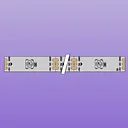
- 5m of WS2812/Neopixel-compatible addressable LED wire (50 LEDs)
- USB A to micro-B cable
Software
You can program Pico/RP2040 boards in a bunch of different ways, but if you're a beginner we'd recommend using our batteries included MicroPython build for ease of getting started. We've pre-loaded the Plasma Stick with pirate-brand MicroPython and some fun examples to show you different things you can do, from an ominous night light that gets brighter the closer it gets to midnight to a good old fashioned flame effect to huddle round on cold nights.
- (Learn) Assembling your Wireless Plasma Kit
- (Learn) Getting Started with Raspberry Pi Pico
- Download pirate-brand MicroPython (you'll need the picow .uf2)
- MicroPython examples
- MicroPython function reference
- C++ examples
Alternatively, you could install CircuitPython on your Pico W! CircuitPython is an easy to use, well-established ecosystem with lots of example code and drivers for interfacing with different kinds of hardware - and it's just got Pico W wireless support, woop!
- Download CircuitPython for Pico W
- Welcome to CircuitPython
- CircuitPython examples
- Quick-Start the Pico W WiFi with CircuitPython
If you're adapting examples from elsewhere and need to know the pins that Plasma Stick uses, it's GP15 for LED data, GP4 for I2C SDA and GP5 for I2C SCL.
Connecting Breakouts
The Qw/ST connector on Plasma Stick makes it super easy to connect up Qwiic or STEMMA QT breakouts. If your breakout has a QW/ST connector on board, you can plug it straight in with a JST-SH to JST-SH cable.
Breakout Garden breakouts that don't have a Qw/ST connector can be connected using a JST-SH to JST-SH cable plus a Qw/ST to Breakout Garden adaptor. Want to use >2 breakouts at the same time? Try this adaptor!
- List of breakouts currently compatible with our C++/MicroPython build.
About Pico W Aboard
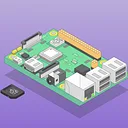
Our new Pico W Aboard products come with a built in Raspberry Pi Pico W. This means you get all the advantages of a RP2040 microcontroller - a speedy fast dual-core ARM processor, a dynamic, growing ecosystem and a choice of different programming methods to experiment with. Most excitingly though, Pico W has wireless connectivity, so your Pico/RP2040 devices can communicate with each other, and the internet!
Jargon buster
Plain-language definitions for the technical terms used above.
- breakout
- A breakout board carries a small or fine-pitched component and brings its connections out to standard, breadboard- and header-friendly pins. Describing a part as a breakout means it can be wired into a project without soldering directly to the component's tiny contacts.
- CircuitPython
- A beginner-friendly version of Python designed to run directly on microcontroller boards. If a product supports CircuitPython, you can often program it by copying code files onto the board rather than setting up a more complex toolchain.
- I2C
- I2C is a two-wire communication bus used by many sensors and small modules. It matters because several I2C devices can share the same two wires, but each device needs a compatible address and your controller must support I2C.
- LED
- A light-emitting diode (LED) is a small electronic component that emits light when current flows through it in the correct direction. Because it only conducts one way, its polarity matters, and a through-hole LED must be soldered the correct way around to light up.
- microcontroller
- A microcontroller is a small computer on a single chip that runs a stored program and controls connected inputs and outputs such as buttons, sensors, displays and communication interfaces. In a device built around one, it is the part that executes the code and coordinates the device's behaviour.
- MicroPython
- A version of the Python programming language made to run on microcontrollers. It matters because it lets beginners write readable code to control LEDs, sensors, motors and displays without needing to start with lower-level languages.
- NeoPixel
- A type of addressable LED system where colour data is sent along a single digital data line from one LED or controller to the next. Compatibility matters because the timing and signal format must match for the lights or driver board to respond correctly.
- Qwiic
- Qwiic is a plug-in connector system for I2C devices that uses small 4-pin cables, so you can connect compatible sensors without soldering. It matters because your controller or adapter also needs Qwiic, or you will need a cable or breakout to wire it up.
- RGB
- Short for red, green and blue, the three primary colours of light that are mixed in varying amounts to make a wide range of colours. In electronics RGB can refer to an LED or pixel that blends these three colours, or to a colour signal or interface that carries separate red, green and blue channels.
- RP2040
- The RP2040 is a dual-core Arm Cortex-M0+ microcontroller chip from Raspberry Pi, used on many maker boards and offering programmable I/O, multiple GPIO pins and reasonable processing speed. Code and accessories built for that chip should work where RP2040 compatibility is listed, though demanding tasks such as reading a camera can require careful pin allocation and timing.
- SCL
- The clock line used by the I2C bus to keep data transfers timed between a controller and connected devices. When wiring I2C, SCL must be connected to the SCL pin on every device sharing the bus.
- SDA
- The data line used by the I2C bus to carry information between a controller and connected devices. When wiring I2C, SDA must be connected to the SDA pin on every device sharing the bus.
- STEMMA QT
- A small plug-in connector system for I2C boards that lets you connect compatible sensors and controllers without soldering. It matters because it can make wiring faster and less error-prone, especially when adding several small modules to a project.
Find this product in
Brands
Raspberry Pi
STEM & Education
pico datasheet
Datasheet · 16.6 MB · Click any page to view full size
welcome to circuitpython
Circuit Diagram · 10.6 MB · Click any page to view full size
pico w wifi with circuitpython
Circuit Diagram · 2.1 MB · Click any page to view full size
Resources & Downloads
Guides, code examples, and more
Related Tutorials
Free step-by-step guides