SparkFun
SparkFun Inventor's Kit (for Arduino Uno) - V3.2
The SparkFun Inventor’s Kit (SIK) is a great way to get started with programming and hardware interaction with the Arduino programming language. The SIK i...
Get notified when back in stock
The SparkFun Inventor’s Kit (SIK) is a great way to get started with programming and hardware interaction with the Arduino programming language. The SIK includes everything you need to complete 16 circuits that will teach you how to read sensors, display information on an LCD, drive motors, and more. You don’t need any previous programming or electronics experience to use this kit.
The on-line SIK Digital Guide (in the Documents section below) contains step by step instructions of how to connect each circuit with the included parts. Full example code is provided and explained and even includes troubleshooting tips if something goes wrong.
The kit does not require any soldering and is recommended for beginners ages 10 and up. This International version includes the new Simon Says circuit experiment found in the V3.2 SIK with all the LEDs and tactile buttons you will need to complete it, the kit also replaces the SparkFun RedBoard for the tried and true Arduino Uno and removes the SIK Guidebook and carrying case. With these parts being swapped and removed we were able to reduce the overall size and weight of the kit making shipping cheaper and easier for anyone ordering it internationally.
Note: As stated above, this SIK does NOT include a carrying case. If you would like to purchase one separately they can be found in the Recommended Products below.
Circuit Examples:
- Circuit 1: Blinking an LED
- Circuit 2: Reading a Potentiometer
- Circuit 3: Driving and RGB LED
- Circuit 4: Driving Multiple LEDs
- Circuit 5: Push Buttons
- Circuit 6: Reading a Photo Resistor
- Circuit 7: Reading a Temperature Sensor
- Circuit 8: Driving a Servo Motor
- Circuit 9: Using a Flex Sensor
- Circuit 10: Reading a Soft Potentiometer
- Circuit 11: Using a Buzzer
- Circuit 12: Driving a Motor
- Circuit 13: Using Relays
- Circuit 14: Using a Shift Register
- Circuit 15: Using an LCD
- Circuit 16: Simon Says
Kit Includes:
- Arduino Uno - R3 SMD
- Arduino and Breadboard Holder
- White Solderless Breadboard
- SparkFun Mini Screwdriver
- 16x2 White on Black LCD (with headers)
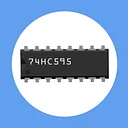
- 74HC595 Shift Register
- 2N2222 Transistors
- 1N4148 Diodes
- DC Motor with Gear
- Small Servo
- SPDT 5V Relay
- TMP36 Temp Sensor
- Flex sensor
- Softpot
- 6' SparkFun USB Cable
- Jumper Wires
- Photocell
- Tri-color LED
- Red, Blue, Yellow, and Green LEDs
- Red, Blue, Yellow, and Green Tactile Buttons
- 10K Trimpot
- Piezo Speaker
- Big 12mm Buttons
- 330 and 10K Resistors
Documents:
Jargon buster
Plain-language definitions for the technical terms used above.
- Headers
- Rows of connector contacts on a fixed pitch (commonly 2.54 mm) used to link a board to a breadboard, jumper wires, or another board. They come as male pin headers and female socket headers; when a module ships with pre-soldered headers it can be used straight away, whereas bare pads require soldering the pins yourself.
- LCD
- LCD stands for liquid crystal display, a screen technology that uses a backlight and liquid crystals to show images or text. It matters because LCD modules usually need a display driver and enough controller pins or a bus interface to send image data.
- LED
- A light-emitting diode (LED) is a small electronic component that emits light when current flows through it in the correct direction. Because it only conducts one way, its polarity matters, and a through-hole LED must be soldered the correct way around to light up.
- photocell
- A light-sensitive component whose electrical resistance changes with the amount of light falling on it. It matters when choosing or using light sensors, automatic lights, or brightness-detecting circuits because its response speed, resistance range, and sensitivity affect how reliably it detects light levels.
- potentiometer
- A variable resistor usually turned with a knob or shaft to create an adjustable electrical signal. It is often used for inputs such as volume, brightness or position, so it helps beginners learn how a microcontroller reads changing values.
- RGB
- Short for red, green and blue, the three primary colours of light that are mixed in varying amounts to make a wide range of colours. In electronics RGB can refer to an LED or pixel that blends these three colours, or to a colour signal or interface that carries separate red, green and blue channels.
- servo motor
- A motor module that moves to a commanded angle rather than simply spinning freely. It matters for robotics and mechanisms because it is useful for steering, arms, gates and other parts that need controlled position.
Find this product in
Brands
Related Tutorials
Free step-by-step guides