DFRobot
micro:bit V2- an Educational Creative Tool for Kids
The BBC micro:bit V2 is a pocket-sized programmable computer designed to make learning to code fun and accessible. It builds on the hugely successful origina...
Get notified when back in stock
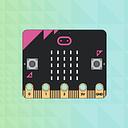
The BBC micro:bit V2 is a pocket-sized programmable computer designed to make learning to code fun and accessible. It builds on the hugely successful original with new onboard features including a speaker, MEMS microphone, and a touch-sensitive logo — all packed into a board just 5 × 4 cm.
Programme it with MakeCode blocks, Python, Scratch, or C++ to create games, music, robots, and interactive gadgets. With over 4 million boards in classrooms worldwide, the micro:bit is one of the most popular STEM education platforms available.
Key Features
- 5 × 5 Programmable LED Matrix – Display text, icons, and animations
- Onboard Speaker – Play tones, melodies, and sound effects
- MEMS Microphone – Detect sound levels with LED indicator
- Touch-Sensitive Logo – Capacitive touch input on the gold logo
- Two Programmable Buttons – A and B for user interaction
- Motion Sensor (LSM303) – Accelerometer and compass
- Temperature Sensor – Built-in thermometer
- Bluetooth 5.0 & Radio – 2.4 GHz wireless for micro:bit-to-micro:bit and BLE communication
- Notched Edge Connector – 25 pins with 3 crocodile-clip-friendly rings; GPIO, PWM, I2C, SPI
- Sleep/Off Mode – Power down with batteries connected to save energy
- 200 mA Regulator – Power external accessories directly from the board
Specifications
- Processor – Nordic nRF52833
- Memory – 512 KB Flash, 128 KB RAM
- Interface Chip – NXP KL27Z, 32 KB RAM
- Power – 5 V via Micro-USB or 3 V via edge connector / battery pack
- Programming – MakeCode (blocks/JavaScript), Python, Scratch, C++
- Dimensions – 50 × 40 mm
Ideal For
- Primary and secondary school STEM education
- Learning to code with blocks, Python, or Scratch
- Interactive science experiments and data logging
- Robotics and wearable technology projects
Resources
Jargon buster
Plain-language definitions for the technical terms used above.
- BLE
- BLE stands for Bluetooth Low Energy, a Bluetooth mode designed for low power use and broad compatibility with modern phones and computers. It connects well to battery-powered and mobile devices, including Apple hardware, though it behaves differently from Bluetooth Classic and its serial-style profiles.
- GPIO
- General-purpose input/output pins are microcontroller pins you can set in software to read signals, switch devices on and off, or connect to peripherals. The number of GPIO pins matters because it limits how many buttons, LEDs, sensors, and other parts you can wire directly to the board.
- I2C
- I2C is a two-wire communication bus used by many sensors and small modules. It matters because several I2C devices can share the same two wires, but each device needs a compatible address and your controller must support I2C.
- LED
- A light-emitting diode (LED) is a small electronic component that emits light when current flows through it in the correct direction. Because it only conducts one way, its polarity matters, and a through-hole LED must be soldered the correct way around to light up.
- MEMS microphone
- A tiny microphone made using micro-electromechanical systems, the same style of miniature manufacturing used in many phone sensors. It lets the board detect sound without needing an external microphone, which is useful for noise-reactive projects and simple audio input.
- PWM
- Pulse Width Modulation is a way for a digital pin to simulate variable output power by switching on and off very quickly. It matters for controlling things like LED brightness, motor speed, or servo-style signals from a microcontroller pin.
- RAM
- RAM (random-access memory) is fast, temporary memory a device uses for working data while it is running; in its common volatile form, its contents are lost when power is removed. Some devices offer a mode that applies settings to RAM only, which is handy for testing changes temporarily because they are not stored permanently and disappear at power-off.
- SPI
- A fast serial communication bus often used for displays, memory cards, and sensors. It matters because SPI devices need specific pins for clock and data, plus a separate chip-select line for each device.
Find this product in
STEM & Education
Supplier page — dfrobot.com
Supplier Description · 365.1 KB · Click any page to view full size
Related Tutorials
Free step-by-step guides