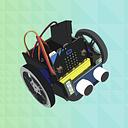
The British Invasion is here! No, not music... microcontrollers! The BBC micro:bit is one of the newest and easiest ways to learn programming and electronics.
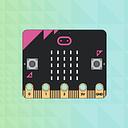
Designed specifically for kids and beginners, the micro:bit is a pocket-sized computer that you can code, customize and control to bring your digital ideas, games and apps to life. It’s a small, code-able device that is a non-intimidating introduction to programming and making – switch on, program it to do something fun – wear it, customize it, develop new ideas.
The micro:bit is based off of the nRF51822
microcontroller, which has built in Bluetooth LE radio. There are two programmable buttons that can be used to control games, send a radio message, activate the display, etc. The micro:bit can detect motion (using an accelerometer) and tell you which direction you are heading in (using a
magnetometer/compass chip). On the bottom is an expansion port, with 5 alligator-clip friendly pads and additional card-edge contacts for 19 total I/O pins. Each of these sensors, inputs, and outputs, is completely programmable via easy-to-use software that can be accessed from a PC, laptop, tablet, or mobile.
Exciting, right? It includes everything you need to begin learning about hardware and software. No programming or hardware experience is necessary!
Jargon buster
Plain-language definitions for the technical terms used above.
- magnetometer
-
A sensor that measures magnetic fields, often used to work out compass direction. It matters because nearby magnets, motors, or metal objects can affect readings and may require calibration.
- microcontroller
-
A microcontroller is a small computer on a single chip that runs a stored program and controls connected inputs and outputs such as buttons, sensors, displays and communication interfaces. In a device built around one, it is the part that executes the code and coordinates the device's behaviour.