DFRobot
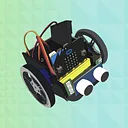
Maqueen Plus V3 - Matrix Laser Navigation STEM Robot for micro:bit
Designed for classroom robotics, this micro:bit-powered platform helps primary and secondary students move from introductory coding through to autonomous nav...
Get notified when back in stock
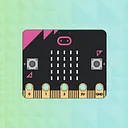
Designed for classroom robotics, this micro:bit-powered platform helps primary and secondary students move from introductory coding through to autonomous navigation and competition-style challenges. It uses a BBC micro:bit as the controller; the micro:bit and batteries are not included.
The robot combines an 8×8 matrix laser ranging sensor, high-precision motor encoders with PID control, and built-in line-tracking algorithms. It can detect obstacles, recognise intersections and plan routes more intelligently than a typical ultrasonic-sensor robot.
Fourteen GPIO expansion ports are available for adding extra sensors and modules, while screw-fixed detachable motors help keep classroom downtime low. The kit includes the Maqueen Plus V3 baseboard, pre-installed encoder motors, a battery board matching the selected version, matrix laser ranging sensor, sensor cable, wheels, line-tracking map, screwdriver, metal frame, metal mounting bracket, copper standoffs, M3 mounting screws and M3 thumb screws.
Features:
- Matrix Laser Ranging: 8×8 (64-point) laser sensor with 20–4000 mm range, up to 60 Hz update rate, and ±11 mm accuracy at close range
- Built-In Line Tracking: 5 line-tracking sensors with dedicated calibration button and 5 adjustable speed levels
- Intersection Recognition: Identifies 4 junction types (crossroad, T-shaped, right+straight, left+straight) in real time
- PID Motor Control: 2× N20 metal motors with magnetic encoders for precise distance and angle control
- Detachable Motors: Screw-fixed, easily replaceable motors to minimise downtime in classroom use
- Regulated Motor Power: Dedicated voltage-stabilising chip maintains consistent speed regardless of battery level
- RGB Lighting: 4× WS2812 ambient LEDs and 2× programmable RGB headlights
- 14 GPIO Expansion Ports: Extend functionality with additional sensors and modules
- Firmware Upgradeable: Dedicated interface and button for future updates
- Class 1 Laser Safety: Eye-safe laser ranging sensor
Specifications:
- Power Supply: 3.5–6V (4× AA batteries: 1.5V dry cells or 1.2V NiMH rechargeable)
- Battery Protection: Reverse connection protection
- Laser Sensor Range: 20–4000 mm
- Laser Accuracy (20–200 mm): ±11 mm (white), ±12 mm (grey)
- Laser Accuracy (200–4000 mm): ±5% (white), ±6% (grey)
- Detection Angle: 60° H × 60° V (90° diagonal)
- Laser Update Rate: 15–60 Hz
- Light Sensors: 2× (0–1023 range)
- Infrared Receiver: 1×
- Buzzer: 1×
- Bracket Adjustment: 1-axis, 270° range (M3 thumb screws)
It is suited to STEM robotics education, robotics competitions, BBC micro:bit programming lessons, autonomous navigation and obstacle-avoidance projects.
Jargon buster
Plain-language definitions for the technical terms used above.
- encoder
- An encoder is a sensor that converts the rotation or position of a shaft, knob or dial into electrical signals, reporting movement as incremental steps and direction, or as an absolute position. It is used to track how far something has turned, which matters for precise positioning, speed control, repeatable movement, or using a rotary knob as an input.
- GPIO
- General-purpose input/output pins are microcontroller pins you can set in software to read signals, switch devices on and off, or connect to peripherals. The number of GPIO pins matters because it limits how many buttons, LEDs, sensors, and other parts you can wire directly to the board.
- RGB
- Short for red, green and blue, the three primary colours of light that are mixed in varying amounts to make a wide range of colours. In electronics RGB can refer to an LED or pixel that blends these three colours, or to a colour signal or interface that carries separate red, green and blue channels.
Find this product in
Brands
micro:bit
Robotics & Coding
Robotics & Motion
STEM & Education
Related Tutorials
Free step-by-step guides