DFRobot
FireBeetle Covers-CameraAudio Media Board
DFRobot FireBeetle series are low power consumption development modules designed for Internet of Things (IoT). The FireBeetle Covers-Camera & Audio Media...
Get notified when back in stock
DFRobot FireBeetle series are low power consumption development modules designed for Internet of Things (IoT). The FireBeetle Covers-Camera & Audio Media Board is a multimedia device for IoT that provides interfaces to connect NAU8822 CODEC IIS, OV7725 camera, SD card (SDIO), earphone and microphone.
Moreover, it equips with a mini MIC input interface. The NAU8822 CODEC IIS can drive both 12@8Ω BTL loudspeaker and 40mW@16Ω earphone. The direct connection is supported. Meanwhile, NAU8822 supports DAC sound signal acquisition and programmable microphone amplifier. The recording is available when input voices with onboard MIC interface or microphone then save it to SD card. What's more, the function to take photos is available when connected to an OV7725 CAMERA.
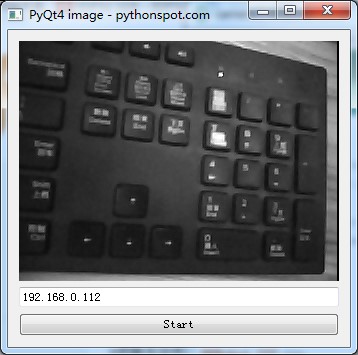
With any FireBeetle main boards (e.g. ESP32 main board), the FireBeetle Covers-Camera & Audio Media Board could be a MP3, a recorder, a camera. Once connected to the Internet, it could be an Internet radio, a cloud image recognition.
NOTE:
- This media board only supports FireBeetle ESP32 main board at present, for other main boards do not equipped with IIS interface.
- The flat ribbon cable of camera is relatively easy-to-break, please be careful and light in connection. The camera shot must be opposite to the SD card slot.
- It does not support video shooting and transmission.
SPECIFICATION
- Operating Voltage: 3.7V~5.5V (VCC)
- Output Voltage: 3.3V
- User-defined Button: tested by IO16(DI)
- RESET x1
- SD Card:
Bus Interface: SDIO Protocol
Default Transmission Rate: 10MHz
Max. Transmission Rate: 20MHz - Camera OV7725: (data as below is just for reference; some functions could not be realized by ESP32 now).
Photosensitive/Light-sensitive Array: 640*480
Optical Size: 1/6"
Angle of View: 25°
SCCB Standard Interface
Output Pixel Format: Raw RGB,RGB(RGB4:2:2 ,RGB565/555/444),YCbCr (4:2:2)
Image Size: VGA,QVGA and CIF to 40x30
VarioPixel Subsampling
Auto Image Control: auto exposure control (AEC), auto gain control (AGC), auto white balance (AWB), auto band filter and auto black level (ABL) calibration.
Image Quality Control: saturation, tone, gamma, clarity and anti-interference
ISP: noise reduction and defect calibration
Lens Shading Correction
Auto Saturation Adjustment
Frame Synchronization
Fixed-focus - NAU8822:
DAC:94dB SNR , -84db THD
ADC:90dB SNR , -80dB THD
Integrated BTL loudspeaker drive: 1W @ 8Ω
Integrated earphone drive: 40mW @ 16Ω
Integrated programmable microphone amplifier
Typical Sampling Rate: 8KHz, 48KHz, 96KHz, 192KHz
Standard Video Interface: PCM and I2S - MIC:
Type: Electret Capacitor
Output: analog
Direction: omnidirectional
Frequency Range: 100Hz~15KHz
Sensitivity: -43dB ±5dB @ 94dB SPL
Signal-to-noise Ratio: 58Db
DOCUMENTS
Jargon buster
Plain-language definitions for the technical terms used above.
- ADC
- An analogue-to-digital converter reads a changing voltage and turns it into a number the microcontroller can use. It matters when connecting analogue sensors such as light, sound, or variable-resistor sensors.
- DAC
- A digital-to-analogue converter turns numbers from the microcontroller into a real analogue voltage. It matters if you want to generate simple waveforms, audio-style signals, or variable control voltages rather than just on/off outputs.
- ESP32
- ESP32 is a family of low-cost microcontroller chips and modules from Espressif with built-in WiFi and Bluetooth. They support programmable firmware and over-the-air updates, and are commonly programmed with toolchains such as the Arduino core and ESP-IDF.
- I2S
- I2S is a digital audio interface used to send sound data between chips, such as from a microcontroller to an audio amplifier or DAC. It matters if your project needs cleaner digital audio output than a basic buzzer or PWM signal can provide.
- IoT
- Short for Internet of Things, meaning physical devices that connect to networks or the internet to send data or be controlled remotely. It matters if you want projects such as connected sensors, remote controls or classroom data-logging activities.
- ISP
- In electronics, ISP usually means In-System Programming, a way to load firmware onto a microcontroller while it stays on the board (often via an ICSP header), or an Image Signal Processor, hardware that turns raw camera sensor data into usable images and offloads the main CPU. The surrounding context shows which meaning applies.
- RGB
- Short for red, green and blue, the three primary colours of light that are mixed in varying amounts to make a wide range of colours. In electronics RGB can refer to an LED or pixel that blends these three colours, or to a colour signal or interface that carries separate red, green and blue channels.
- VCC
- VCC is the positive power-supply connection on a chip or module. Connecting it to the correct supply voltage is needed for the part to power on and helps avoid damaging the electronics.
- VGA
- VGA has two common meanings in electronics: as a resolution it usually refers to a 640 x 480 pixel image, which is modest detail suitable for basic display or inspection rather than high definition; as a connector it refers to the analogue 15-pin video output long used on computers and monitors. Check which sense a listing means.
Find this product in
Audio & Video
Brands
Supplier page — dfrobot.com
Supplier Description · 735.5 KB · Click any page to view full size
DFR0498 firebeetle camera audio board schematics v1.0
Schematic · 325.3 KB · Click any page to view full size
Resources & Downloads
Guides, code examples, and more
Related Tutorials
Free step-by-step guides