Little Bird
enviro:bit
Sense the world around you with enviro:bit! It's loaded with sensors for air and weather, colour and light, and sound, and slots right onto your micro:bit...
Get notified when back in stock
Sense the world around you with enviro:bit! It's loaded with sensors for air and weather, colour and light, and sound, and slots right onto your micro:bit.
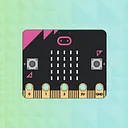
Just slot in your micro:bit, then code enviro:bit with the block-based Microsoft MakeCode editor, or with MicroPython in the Mu code editor. The sensors go hand-in-hand really well with the LED matrix on micro:bit, letting you graph sensors readings or have the LEDs react to sound, for example.
Features
- Comes fully-assembled and ready to use
- BME280 temperature, pressure, and humidity sensor
- TCS3472 light and colour sensor
- MEMS microphone
- Compatible with micro:bit
- Microsoft MakeCode and MicroPython support
- No soldering required!
Software
You can code enviro:bit with the block-based Microsoft MakeCode editor, that'll get you started with using the sensor readings from enviro:bit, if you want to delve deeper, then you can use MicroPython in the Mu code editor.
To add the enviro:bit library in MakeCode, click on the cog at the top right hand corner, then "Add Package", then search for "envirobit". You can find full instructions at the GitHub repository for the library.
Our MicroPython library for enviro:bit is also available at GitHub, again with full instructions on how to get going with it.
Jargon buster
Plain-language definitions for the technical terms used above.
- LED
- A light-emitting diode (LED) is a small electronic component that emits light when current flows through it in the correct direction. Because it only conducts one way, its polarity matters, and a through-hole LED must be soldered the correct way around to light up.
- MEMS microphone
- A tiny microphone made using micro-electromechanical systems, the same style of miniature manufacturing used in many phone sensors. It lets the board detect sound without needing an external microphone, which is useful for noise-reactive projects and simple audio input.
- MicroPython
- A version of the Python programming language made to run on microcontrollers. It matters because it lets beginners write readable code to control LEDs, sensors, motors and displays without needing to start with lower-level languages.
Find this product in
Related Tutorials
Free step-by-step guides