Elecrow
Elecrow Upgraded Electronics Kit
All Products
New Arrivals
Arduino
Circuitry & IOT
Elecrow
Prototyping
Digital Technologies
Education
Components
Prototyping & Wiring
STEM Education Kits
$28.45
|
In stock
A comprehensive 300+ piece electronics component kit for getting started with Arduino, Raspberry Pi, and general electronics prototyping. Everything is packe...
Get notified when back in stock
Estimated Delivery
Arrives
Order now — ships Tue 6 Oct
Disclaimer
Secure checkout
A comprehensive 300+ piece electronics component kit for getting started with Arduino, Raspberry Pi, and general electronics prototyping. Everything is packed into a single box for organised, efficient access — covering the core components you'll reach for again and again across beginner and intermediate projects.
Ideal For
- Beginners building their first electronics component collection
- Arduino and Raspberry Pi project prototyping
- Students, hobbyists, and classroom use
Package Contents
- 1× Power supply module
- 1× 830-tie-point breadboard
- 1× Set of 65 jumper wires
- 140× Solderless jumper wires
- 20× Female-to-male Dupont wires
- 2× 40-pin header strips
- 1× Precision potentiometer
- 2× Photoresistor
- 1× Thermistor
- 5× Diode rectifier (1N4007)
- 5× NPN transistor (PN2222)
- 1× IC 4N35 (optocoupler)
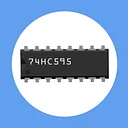
- 1× IC 74HC595 (shift register)
- 1× Active buzzer, 1× Passive buzzer
- 10× Push button (small)
- 10× 22pF ceramic capacitor, 10× 104 ceramic capacitor
- 5× 10µF 50V electrolytic capacitor, 5× 100µF 50V electrolytic capacitor
- 10× each: White, Yellow, Blue, Green, Red LED; 1× RGB LED
- 10× each: 10Ω, 100Ω, 220Ω, 330Ω, 1kΩ, 2kΩ, 5kΩ, 10kΩ, 100kΩ, 1MΩ resistors
Jargon buster
Plain-language definitions for the technical terms used above.
- 1N4007
- A common general-purpose rectifier diode rated for relatively high reverse voltage. It is often used in power supplies and protection circuits where speed is not critical.
- electrolytic capacitor
- An electrolytic capacitor is a type of capacitor that can store relatively large amounts of electrical charge in a small package. It is commonly used for smoothing power supplies, reducing noise, and short-term energy storage, but it usually has polarity so it must be installed the correct way around.
- LED
- A light-emitting diode (LED) is a small electronic component that emits light when current flows through it in the correct direction. Because it only conducts one way, its polarity matters, and a through-hole LED must be soldered the correct way around to light up.
- photocell
- A light-sensitive component whose electrical resistance changes with the amount of light falling on it. It matters when choosing or using light sensors, automatic lights, or brightness-detecting circuits because its response speed, resistance range, and sensitivity affect how reliably it detects light levels.
- potentiometer
- A variable resistor usually turned with a knob or shaft to create an adjustable electrical signal. It is often used for inputs such as volume, brightness or position, so it helps beginners learn how a microcontroller reads changing values.
- rectifier diode
- A diode designed to let current flow mainly in one direction, often used to convert AC into DC or to protect circuits from reverse current. It matters because rectifier diodes are chosen for power handling rather than fast signal switching.
- RGB
- Short for red, green and blue, the three primary colours of light that are mixed in varying amounts to make a wide range of colours. In electronics RGB can refer to an LED or pixel that blends these three colours, or to a colour signal or interface that carries separate red, green and blue channels.
Find this product in
STEM & Education
Related Tutorials
Free step-by-step guides