- CircuitPython
-
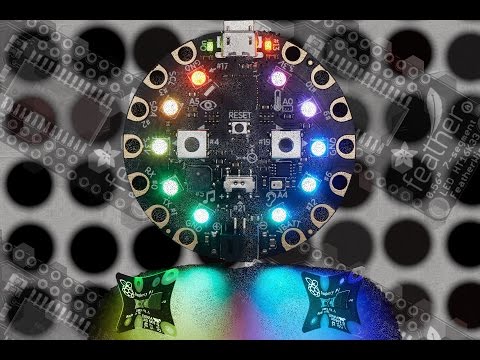
A beginner-friendly version of Python designed to run directly on microcontroller boards. If a product supports CircuitPython, you can often program it by copying code files onto the board rather than setting up a more complex toolchain.
- CS
-
CS stands for chip select, a control pin used by SPI devices to tell which connected device should listen. It matters when you connect more than one SPI module to the same microcontroller, because each device usually needs its own CS pin.
- HID
-
Human Interface Device is a USB device class used for keyboards, mice, gamepads and similar controls. If a board supports HID over USB, it can act like an input device to a computer without needing a custom driver.
- I2C
-
I2C is a two-wire communication bus used by many sensors and small modules. It matters because several I2C devices can share the same two wires, but each device needs a compatible address and your controller must support I2C.
- IDE
-
Short for Integrated Development Environment, a program used to write, run and manage code. It matters because some learners prefer a traditional coding workspace instead of a guided notebook-style lesson.
- LED
-
A light-emitting diode (LED) is a small electronic component that emits light when current flows through it in the correct direction. Because it only conducts one way, its polarity matters, and a through-hole LED must be soldered the correct way around to light up.
- LIS3DH
-
A specific low-power 3-axis accelerometer chip made by STMicroelectronics. Knowing the chip part number helps you find the correct datasheet, libraries, wiring details, and limits such as its safe voltage range.
- MEMS microphone
-
A tiny microphone made using micro-electromechanical systems, the same style of miniature manufacturing used in many phone sensors. It lets the board detect sound without needing an external microphone, which is useful for noise-reactive projects and simple audio input.
- MIDI
-
MIDI is a standard way for electronic instruments, controllers, and software to send musical control messages such as notes, velocity, and timing. If a board supports MIDI, it can be triggered from keyboards, drum pads, sequencers, or other music gear rather than only from buttons or code.
- phototransistor
-
A light-sensitive transistor that changes its electrical output when light hits it. Compared with a modulated IR receiver, a simple phototransistor can be more affected by ambient light, so it may need extra filtering or careful setup.
- PWM
-
Pulse Width Modulation is a way for a digital pin to simulate variable output power by switching on and off very quickly. It matters for controlling things like LED brightness, motor speed, or servo-style signals from a microcontroller pin.
- UART
-
UART is a simple asynchronous serial interface that sends data over separate transmit and receive wires, usually labelled TX and RX, with both ends set to the same baud rate. It is a common way for microcontrollers and other serial devices to exchange data.