SparkFun
SparkFun Pro Micro - ESP32-C3
· MPN: DEV-23484
Don't be fooled by its miniature size; the SparkFun Pro Micro ESP32-C3 packs a punch. This micro marvel crams the powerful ESP32-C3, a single-core RISC-V pow...
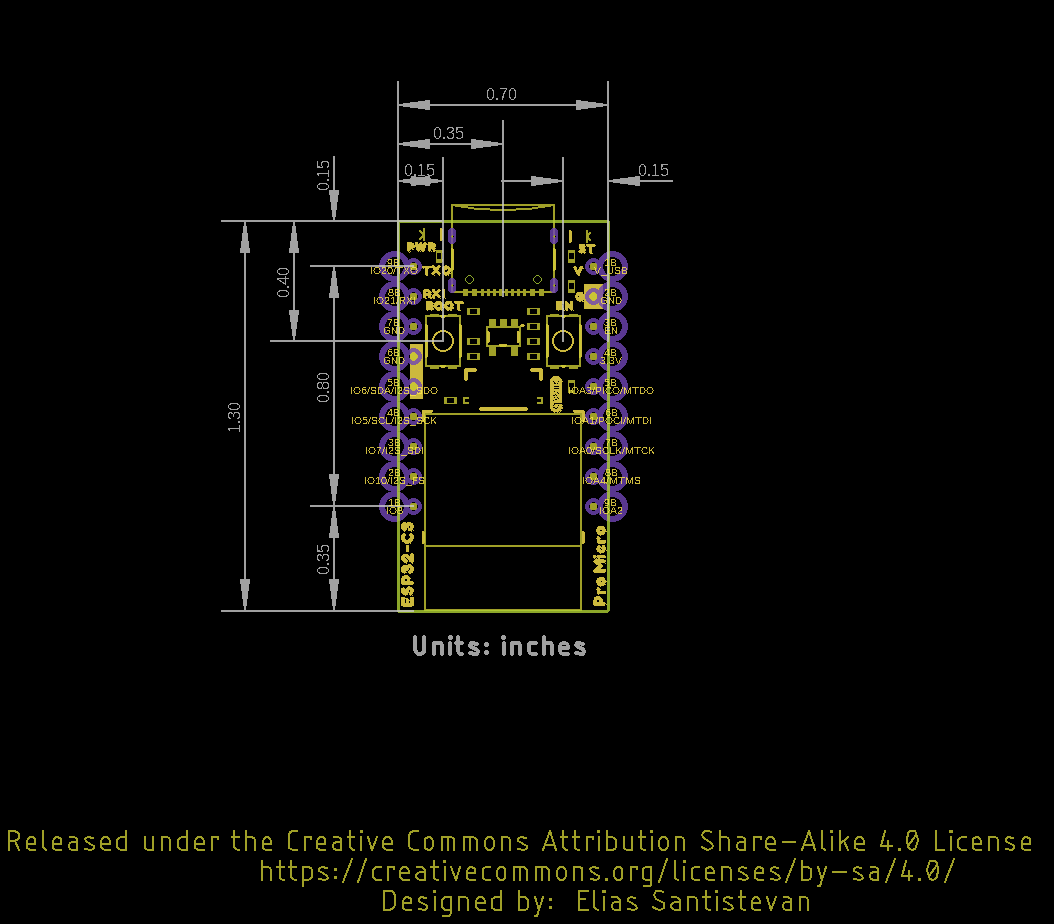
Don't be fooled by its miniature size; the SparkFun Pro Micro ESP32-C3 packs a punch. This micro marvel crams the powerful ESP32-C3, a single-core RISC-V powerhouse with 400KB of SRAM, into a compact 1.3in. x 0.7in. board. Clocking in at 160MHz, it's ready to tackle your projects quickly and efficiently.
Forget wires and soldering headaches – the Pro Micro ESP32-C3 embraces the simplicity of the Qwiic connector. Just plug and play any Qwiic sensor and watch your projects come alive with environmental data, motion detection, or whatever your imagination conjures. And stay connected, wherever you are, with built-in WiFi and Bluetooth® 5 (LE).
But the Pro Micro ESP32-C3 isn't just about small talk. Its 22 programmable GPIOs, accessible through handy castellated headers, unlock a multitude of possibilities. From tinkering with LEDs and servos to crafting intricate sensor networks, this tiny titan has the muscle to handle it all. And thanks to support for a range of protocols like ADC, SPI, UART, and I2C, the creative toolbox keeps expanding.
The Pro Micro ESP32-C3 taps into the power of Espressif's open-source ESP-IDF, a robust ecosystem brimming with libraries, tools, and a supportive community. Plus, you can leverage the familiar Arduino IDE for a smooth development experience.
So whether you're building a wearable masterpiece, a chatty IoT gadget, or a robotic friend, the SparkFun Pro Micro ESP32-C3 is your pint-sized partner in innovation. Grab one today and let your small-scale dreams take flight!
Note: Unlike other ESP32 boards, this device requires user interaction to program. To program the device, hold down BOOT while resetting it. This is a simple process, but it is not automatic.
The SparkFun Qwiic Connect System is an ecosystem of I2C sensors, actuators, shields and cables that make prototyping faster and less prone to error. All Qwiic-enabled boards use a common 1mm pitch, 4-pin JST connector. This reduces the amount of required PCB space, and polarized connections mean you can’t hook it up wrong.
Features:
- CPU and On Chip Memory
- ESP32-C3FH4 embedded,32-bit RISC-V single-core processor, up to 160MHz
- 384 KB ROM
- 400 KB SRAM (16 KB for cache)
- 8 KB SRAM in RTC
- 4 MB flash in chip package
- WiFi
- 802.11b/g/n
- Center frequency range of operating channel:2412~2484 MHz
- Supports 20 MHz, 40 MHz bandwidth in 2.4 GHz band
- 1T1R mode with data rate up to 150 Mbps
- Wi-Fi Multimedia (WMM)
- TX/RX A-MPDU, TX/RX A-MSDU
- Immediate Block ACK
- Fragmentation and defragmentation
- Bluetooth
- Bluetooth LE: Bluetooth 5, Bluetooth mesh
- Speed: 125 Kbps, 500 Kbps, 1 Mbps, 2 Mbps
- Channel selection algorithm #2
- Internal co-existence mechanism between Wi-Fiand Bluetooth to share the same antenna
- Peripherals
- GPIO, SPI, UART, I2C, I2S, remote control peripheral, LED PWM controller, general DMA controller, TWAI®controller (compatible with ISO11898-1, i.e. CAN Specification 2.0), USBSerial/JTAG controller, temperature sensor, SARADC, general-purpose timers, watchdog timers
- Integrated Components on Module
- 40 MHz crystal oscillator
- Antenna Options
- On-board PCB antenna (ESP32-C3-MINI-1)
- Operating Conditions
- Operating voltage/Power supply: 3.0 ~ 3.6 V
- Operating ambient temperature: –40 ~ 85 °C
- 1x Vertical Qwiic Connector
Documents:
- Schematic
- Eagle Files
- Board Dimensions
- Hookup Guide
- Datasheet (ESP32-C3FN4)
- Reference Manual
- Qwiic Info Page
- GitHub Hardware Repo
Videos
Jargon buster
Plain-language definitions for the technical terms used above.
- ADC
- An analogue-to-digital converter reads a changing voltage and turns it into a number the microcontroller can use. It matters when connecting analogue sensors such as light, sound, or variable-resistor sensors.
- ESP-IDF
- ESP-IDF is Espressif’s official software development framework for ESP32-family chips. It gives more direct control over the hardware than beginner-style environments, which can help with advanced features like Wi-Fi, Bluetooth, audio and power management.
- ESP32
- ESP32 is a family of microcontroller modules with built-in wireless features such as Bluetooth and WiFi. Knowing this product uses an ESP32-based module helps explain how it provides wireless serial communication and firmware update features.
- GPIO
- General-purpose input/output pins are microcontroller pins you can set in software to read signals, switch devices on and off, or connect to peripherals. The number of GPIO pins matters because it limits how many buttons, LEDs, sensors, and other parts you can wire directly to the board.
- Headers
- Rows of metal pins used to plug a module into a breadboard or connect it with jumper wires. Pre-soldered headers make the module easier to use straight away without needing to solder the pins yourself.
- I2C
- I2C is a two-wire communication bus used by many sensors and small modules. It matters because several I2C devices can share the same two wires, but each device needs a compatible address and your controller must support I2C.
- I2S
- I2S is a digital audio interface used to send sound data between chips, such as from a microcontroller to an audio amplifier or DAC. It matters if your project needs cleaner digital audio output than a basic buzzer or PWM signal can provide.
- IDE
- Short for Integrated Development Environment, a program used to write, run and manage code. It matters because some learners prefer a traditional coding workspace instead of a guided notebook-style lesson.
- IoT
- Short for Internet of Things, meaning physical devices that connect to networks or the internet to send data or be controlled remotely. It matters if you want projects such as connected sensors, remote controls or classroom data-logging activities.
- JTAG
- JTAG is a hardware debugging and programming interface used to inspect and control chips at a low level. It matters for advanced development because it can help diagnose firmware problems that are hard to see through normal serial output.
- LED
- A light-emitting diode is a small electronic component that lights up when current flows through it in the correct direction. In this kit, LEDs create the flashing effect, so polarity and correct soldering matter for the project to work.
- Motion detection
- A camera feature that checks the image for changes that suggest something has moved. It matters because your project can use movement as a trigger instead of constantly saving or processing every frame.
- PCB
- A printed circuit board is a rigid board with copper tracks that connect electronic parts without loose wires. For this kit, the PCBs also form the airplane shape, so they are both the circuit base and part of the finished model.
- PCB antenna
- A PCB antenna is an antenna pattern built directly into the circuit board rather than a separate metal antenna. It matters because placement, nearby metal and enclosure design can affect wireless range.
- PWM
- Pulse Width Modulation is a way for a digital pin to simulate variable output power by switching on and off very quickly. It matters for controlling things like LED brightness, motor speed, or servo-style signals from a microcontroller pin.
- Qwiic
- Qwiic is a plug-in connector system for I2C devices that uses small 4-pin cables, so you can connect compatible sensors without soldering. It matters because your controller or adapter also needs Qwiic, or you will need a cable or breakout to wire it up.
- RISC-V
- An open processor architecture used inside some modern microcontroller chips. It matters because it affects the software tools, performance, and low-power features available for developing projects on the board.
- RTC
- A Real-Time Clock keeps track of time even when the main processor is asleep or powered down, usually with a small backup battery. It matters for data logging and tracking projects that need accurate timestamps.
- SPI
- A fast serial communication bus often used for displays, memory cards, and sensors. It matters because SPI devices need specific pins for clock and data, plus a separate chip-select line for each device.
- SRAM
- Fast temporary memory used by a processor while a program is running. More SRAM helps with projects that handle larger data buffers, networking, displays, or more complex code.
- UART
- UART is a simple serial connection that sends data over separate transmit and receive wires, often labelled TX and RX. It matters because this module is designed to replace a wired UART cable with a wireless link while keeping the same serial data format.
Find this product in
Brands
Connectivity
SparkFun Pro Micro ESP32-C3 Schematic
Schematic · 162.3 KB · Click any page to view full size
ESP32-C3FN4 Datasheet
Datasheet · 889.9 KB · Click any page to view full size
ESP32-C3 Technical Reference Manual
User Guide · 9.2 MB · Click any page to view full size
Supplier page — sparkfun.com
Supplier Description · 1.1 MB · Click any page to view full size
Resources & Downloads
Guides, code examples, and more