SparkFun
SparkFun Digi XBee® Explorer USB-C
·
Unleash the power of Digi XBee® modules with the next-gen SparkFun Digi XBee® Explorer USB-C! This compact, easy-to-use adapter is the perfect bridge between...
Get notified when back in stock
Unleash the power of Digi XBee® modules with the next-gen SparkFun Digi XBee® Explorer USB-C! This compact, easy-to-use adapter is the perfect bridge between your computer and any through-hole Digi XBee module, making prototyping and development a breeze. Whether you're a seasoned IoT architect or just starting your wireless journey, the Digi XBee® Explorer USB-C empowers you to bring your ideas to life.
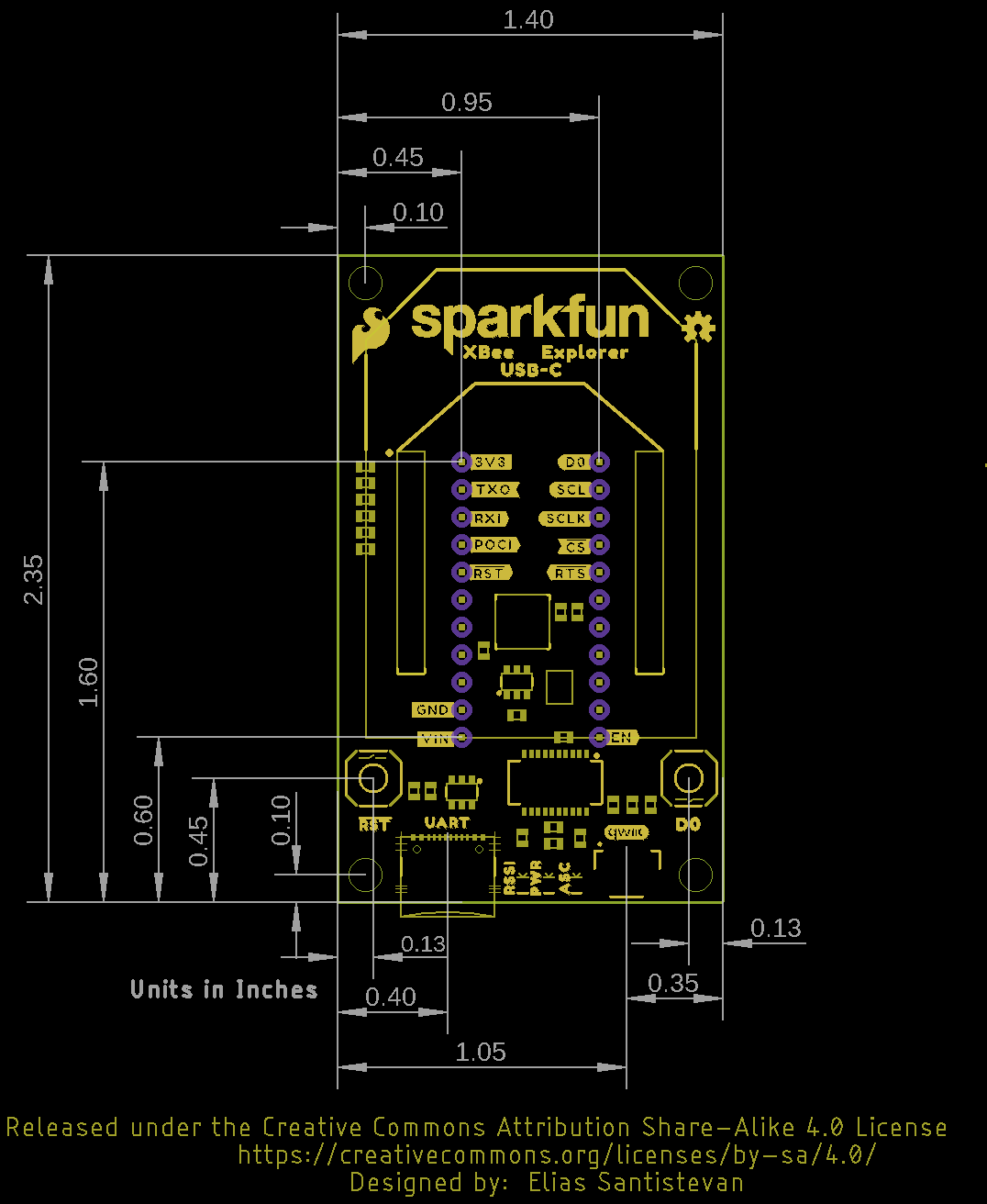
The XBee Explorer USB-C makes it possible to build sensor networks for remote monitoring, control devices wirelessly from your PC, prototype real-time data acquisition systems, and more! This board gives you access to the pin functionality of the XBee, including a single USB-C connector for UART communication, a Qwiic connector for I2C-capable sensors and peripherals, and Reset and D0 buttons.
Digi Remote Manager® allows users to configure and control devices from a central platform easily. Built-in Digi TrustFence® security, identity, and data privacy features use multiple control layers to protect against new and evolving cyber threats. Standard XBee API frames and AT commands, MicroPython, and Digi XCTU® simplify setup, configuration, testing, and adding or changing functionality.
The SparkFun Qwiic Connect System is an ecosystem of I2C sensors, actuators, shields and cables that make prototyping faster and less prone to error. All Qwiic-enabled boards use a common 1mm pitch, 4-pin JST connector. This reduces the amount of required PCB space, and polarized connections mean you can’t hook it up wrong.
Features:
- On-board Digi XBee 3 micro form factor socket
- Configurable via XCTU or AT command
- AP63203 Buck converter (up to 2A)
- FT231XS USB to UART bridge
- Up to 6V supply voltage
- 1x Qwiic connector
- 3x indicator LEDs
- Reset and D0 buttons
Documents:
Copyright Notice: Digi XBee® and XBee® are registered trademarks of Digi International Inc.
Jargon buster
Plain-language definitions for the technical terms used above.
- API
- An API (application programming interface) is a defined set of commands or functions that lets one piece of software interact with another, such as a library, operating system, hardware driver or online service. When something offers API support, it means you can control or query it from your own code rather than only through its built-in menus or buttons.
- Buck converter
- A power circuit that reduces a higher DC voltage to a lower DC voltage. It is useful when your supply voltage is too high for a module or microcontroller and you want less heat and better efficiency than a simple linear regulator.
- IoT
- Short for Internet of Things, meaning physical devices that connect to networks or the internet to send data or be controlled remotely. It matters if you want projects such as connected sensors, remote controls or classroom data-logging activities.
- MicroPython
- A version of the Python programming language made to run on microcontrollers. It matters because it lets beginners write readable code to control LEDs, sensors, motors and displays without needing to start with lower-level languages.
- PCB
- A printed circuit board (PCB) is a board, usually rigid, with etched copper tracks that connect electronic components together without loose wiring. Components are mounted on the board and signals route between them through the copper layout.
- Qwiic
- Qwiic is a plug-in connector system for I2C devices that uses small 4-pin cables, so you can connect compatible sensors without soldering. It matters because your controller or adapter also needs Qwiic, or you will need a cable or breakout to wire it up.
- through-hole
- A mounting style where the component leads pass through holes in a circuit board and are soldered on the other side. Through-hole parts are often easier to handle and solder by hand, which is useful for classroom and hobby projects.
- UART
- UART is a simple asynchronous serial interface that sends data over separate transmit and receive wires, usually labelled TX and RX, with both ends set to the same baud rate. It is a common way for microcontrollers and other serial devices to exchange data.
- USB-C
- USB-C is a small, reversible USB connector that can carry power, data and, on some devices, video over a single cable. The same connector can range from charging only to high-speed data, so the functions a given port actually supports vary.
Find this product in
Connectivity
Prototyping & Wiring
SparkFun Digi XBee Explorer USB-C Schematic
Schematic · 112.3 KB · Click any page to view full size
Supplier page — sparkfun.com
Supplier Description · 712.7 KB · Click any page to view full size
Resources & Downloads
Guides, code examples, and more
Source Code
Open-source libraries, firmware & example projects for this product
Documentation and Hardware for the SparkFun XBee Explorer USB-C
25cb152
4 months ago
· 44 commits
- .github Update mkdocs.yml 4 months ago
- docs Update 22043-SparkFun-XBee-Explorer-USB-C-BuckConverter.jpg over 2 years ago
- Hardware Updates to trademarks per Digi almost 3 years ago
- overrides Updates to trademarks per Digi almost 3 years ago
- Production Renames production zip file to include version number over 3 years ago
- License.md Create License.md over 3 years ago
- mkdocs.yml Update mkdocs.yml 4 months ago
- README.md Updates to trademarks per Digi almost 3 years ago