SparkFun
SparkFun Digi XBee® Arduino Shield - USB-C (Qwiic)
·
The SparkFun Digi XBee Arduino Shield connects Digi XBee 3 modules to your Arduino, enabling wireless communication via LTE-M/NB-IoT, cellular, and GNSS. Com...
Get notified when back in stock
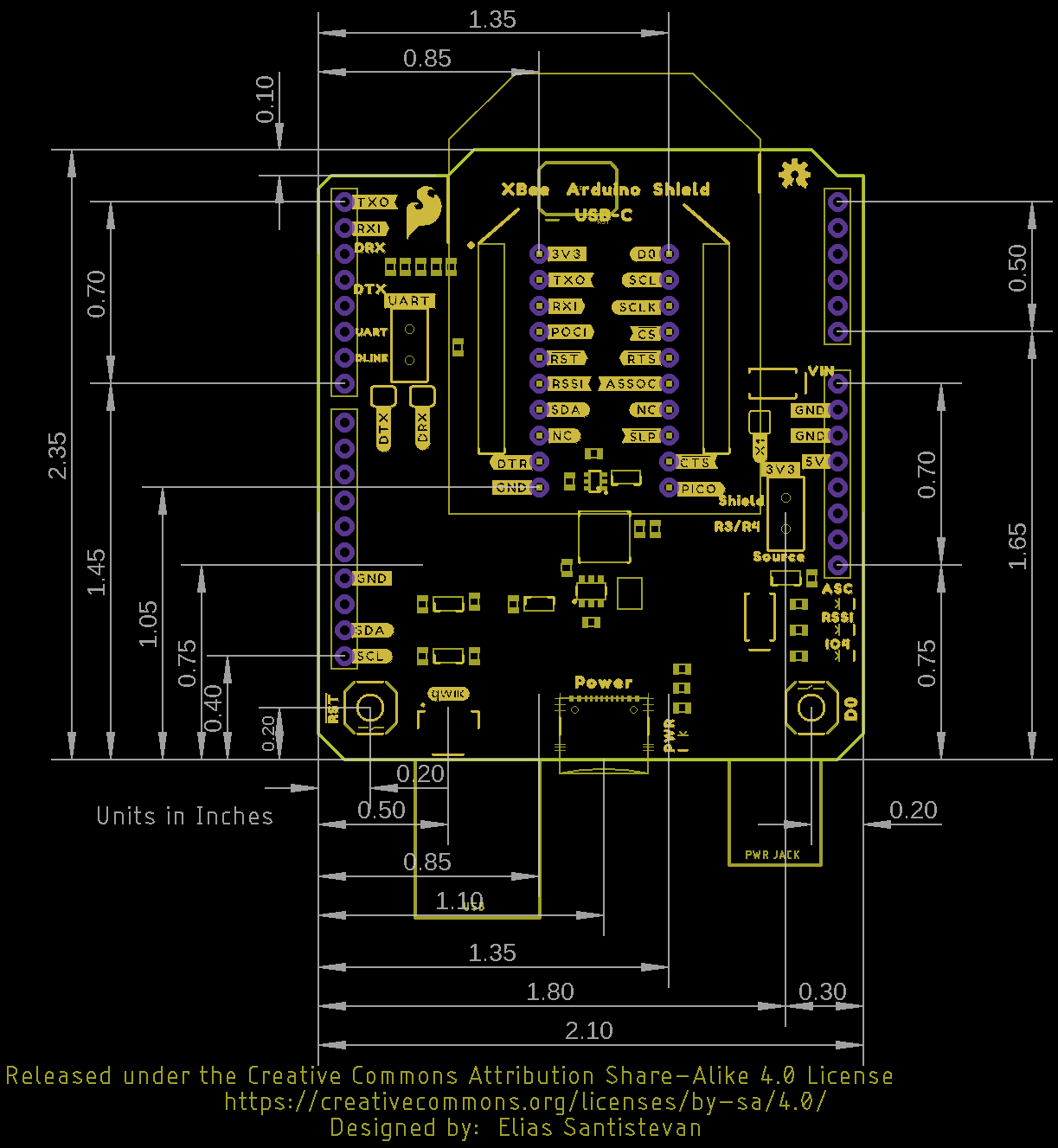
The SparkFun Digi XBee Arduino Shield connects Digi XBee 3 modules to your Arduino, enabling wireless communication via LTE-M/NB-IoT, cellular, and GNSS. Compatible with any through-hole Digi XBee module, this shield features USB-C power, a Qwiic connector for I²C sensors, and a standard Arduino R3 footprint.
Includes an AP63203 buck converter (up to 2A), power and serial selection options, and indicator LEDs. Configure modules using AT commands, MicroPython, or Digi XCTU, with Digi Remote Manager for centralised device management and built-in TrustFence security.
Key Features
- XBee Socket – On-board Digi XBee 3 micro form factor socket for through-hole modules
- USB-C Power – Modern connector with AP63203 buck converter (up to 2A)
- Qwiic Connector – Quick I²C connection for sensors and actuators
- Power Selection – Choose between USB-C or Arduino R3/R4 board power
- Serial Selection – Configurable UART routing
- Reset & D0 Buttons – Reset and user-defined button on-board
- 3 Indicator LEDs – Visual status feedback
- Arduino R3 Footprint – Standard shield form factor
Ideal For
- IoT and cellular connectivity projects
- GNSS/GPS tracking applications
- Wireless sensor networks
- Remote monitoring and control
Package Contents
- 1× SparkFun Digi XBee Arduino Shield – USB-C (Qwiic)
Resources
Jargon buster
Plain-language definitions for the technical terms used above.
- Buck converter
- A power circuit that reduces a higher DC voltage to a lower DC voltage. It is useful when your supply voltage is too high for a module or microcontroller and you want less heat and better efficiency than a simple linear regulator.
- GNSS
- GNSS stands for Global Navigation Satellite System, an umbrella term for satellite positioning networks such as GPS, GLONASS, Galileo and BeiDou. Receivers use these satellites to determine position, and high-precision units can output a steady stream of serial position data.
- GPS
- The US satellite navigation system used by GNSS receivers to calculate position and time. Support for GPS is important because it is widely available and often used together with other constellations for more reliable positioning.
- Headers
- Rows of connector contacts on a fixed pitch (commonly 2.54 mm) used to link a board to a breadboard, jumper wires, or another board. They come as male pin headers and female socket headers; when a module ships with pre-soldered headers it can be used straight away, whereas bare pads require soldering the pins yourself.
- IoT
- Short for Internet of Things, meaning physical devices that connect to networks or the internet to send data or be controlled remotely. It matters if you want projects such as connected sensors, remote controls or classroom data-logging activities.
- LTE-M
- A low-power cellular data standard designed for Internet of Things devices rather than phones. It matters because the board needs LTE-M coverage and a suitable SIM plan in your area to send data over the mobile network.
- MicroPython
- A version of the Python programming language made to run on microcontrollers. It matters because it lets beginners write readable code to control LEDs, sensors, motors and displays without needing to start with lower-level languages.
- NB-IoT
- NB-IoT is a low-power cellular network standard designed for sending small amounts of data from remote devices on long battery life. When a product lists NB-IoT, it can report readings from places without Wi-Fi or Ethernet, provided there is suitable cellular coverage and a data plan.
- Qwiic
- Qwiic is a plug-in connector system for I2C devices that uses small 4-pin cables, so you can connect compatible sensors without soldering. It matters because your controller or adapter also needs Qwiic, or you will need a cable or breakout to wire it up.
- Shield
- An add-on board that plugs into a main controller board to give it extra features such as sensing, motor control or communication. Knowing a product supports shields helps you judge whether it can connect neatly into an existing maker-board setup.
- through-hole
- A mounting style where the component leads pass through holes in a circuit board and are soldered on the other side. Through-hole parts are often easier to handle and solder by hand, which is useful for classroom and hobby projects.
- UART
- UART is a simple asynchronous serial interface that sends data over separate transmit and receive wires, usually labelled TX and RX, with both ends set to the same baud rate. It is a common way for microcontrollers and other serial devices to exchange data.
- USB-C
- USB-C is a small, reversible USB connector that can carry power, data and, on some devices, video over a single cable. The same connector can range from charging only to high-speed data, so the functions a given port actually supports vary.
Find this product in
Brands
Connectivity
SparkFun Digi XBee Arduino Shield Qwiic Schematic
Schematic · 153.3 KB · Click any page to view full size
Supplier page — sparkfun.com
Supplier Description · 833.3 KB · Click any page to view full size
Resources & Downloads
Guides, code examples, and more
Source Code
Open-source libraries, firmware & example projects for this product
Documentation and Hardware Files for the SparkFun XBee Arduino Shield
a7404bf
4 months ago
· 112 commits
- .github Update mkdocs.yml 4 months ago
- docs Update 22131-XBee_Dev_Arduino_Shield-BuckConverter.jpg over 2 years ago
- Documents Replaces old USB mux switch with new one over 3 years ago
- Hardware Updates to naming per Digi almost 3 years ago
- overrides Fixing hard copy links almost 3 years ago
- Production Removes v11, adds v12 production panel almost 3 years ago
- License.md Create License.md over 3 years ago
- mkdocs.yml Update mkdocs.yml 4 months ago
Related Tutorials
Free step-by-step guides