SparkFun
SparkFun BabyBuck Regulator Breakout - 3.3V (AP63203)
$10.00
|
In stock at supplier
Who doesn't occasionally need power regulation? We certainly do, so we've designed the SparkFun BabyBuck Regulator Breakout to help us with just such a task....
Get notified when back in stock
Estimated Delivery
Arrives
Disclaimer
Secure checkout
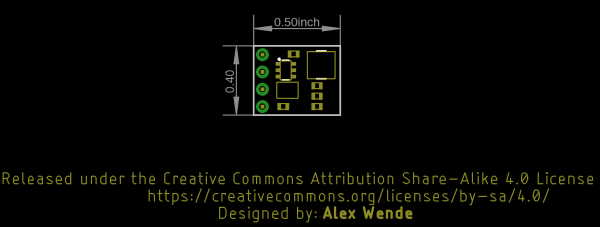
Who doesn't occasionally need power regulation? We certainly do, so we've designed the SparkFun BabyBuck Regulator Breakout to help us with just such a task. Featuring the AP63203 from Diodes Inc, this breakout board takes advantage of a 2A synchronous buck converter that has a wide input voltage range of 3.8V to 32V and fully integrated 125mΩ high-side power MOSFET/68mΩ lowside power MOSFET to provide high-efficiency step-down DC/DC conversion. All of this snuggled up in a low-profile, TSOT26 package that's integrated into a 0.4in by 0.5in board.
Unlike it's sibling, the BabyBuck sacrifices power option flexibility for space. Don't worry, though, because you can still use the plated through holes for input and output power. With some simple right-angle headers, you'll be up and running in no time.
Frequency Spread Spectrum (FSS) reduces EMI and a proprietary gate driver scheme resists switching node ringing without sacrificing MOSFET turn-on and turn-off times, which further erases high-frequency radiated EMI noise.
Features:
- Low-Profile Footprint
- VIN 3.8V to 32V
- VOUT 3.3V
- Up to 2A Continuous Output Current
- 0.8V ± 1% Reference Voltage
- 22µA Ultralow Quiescent Current
- Switching Frequency - 1.1MHz
- Supports Pulse Frequency Modulation (PFM)
- Up to 80% Efficiency at 1mA Light Load
- Up to 88% Efficiency at 5mA Light Load
- Fixed Output Voltage - 3.3V
- Proprietary Gate Driver Design for Best EMI Reduction
- Frequency Spread Spectrum (FSS) to Reduce EMI
- Precision Enable Threshold to Adjust UVLO
- Protection Circuitry
- Overvoltage Protection
- Cycle-by-Cycle Peak Current Limit
- Thermal Shutdown
Documents:
Videos
Jargon buster
Plain-language definitions for the technical terms used above.
- breakout
- A breakout board carries a small or fine-pitched component and brings its connections out to standard, breadboard- and header-friendly pins. Describing a part as a breakout means it can be wired into a project without soldering directly to the component's tiny contacts.
- Buck converter
- A power circuit that reduces a higher DC voltage to a lower DC voltage. It is useful when your supply voltage is too high for a module or microcontroller and you want less heat and better efficiency than a simple linear regulator.
- DC
- DC means direct current, where electricity flows in one constant direction, as supplied by batteries, USB ports and many plug-pack power supplies. When a product specifies DC, it runs from a DC supply rather than mains AC, so you need to provide the correct voltage and polarity.
Find this product in
BabyBuck Regulator Schematic
Schematic · 81.2 KB · Click any page to view full size
AP63203 Datasheet
Datasheet · 1.1 MB · Click any page to view full size
Supplier page — sparkfun.com
Supplier Description · 483.1 KB · Click any page to view full size
Resources & Downloads
Guides, code examples, and more