Little Bird
Scroll pHAT HD - Yellow
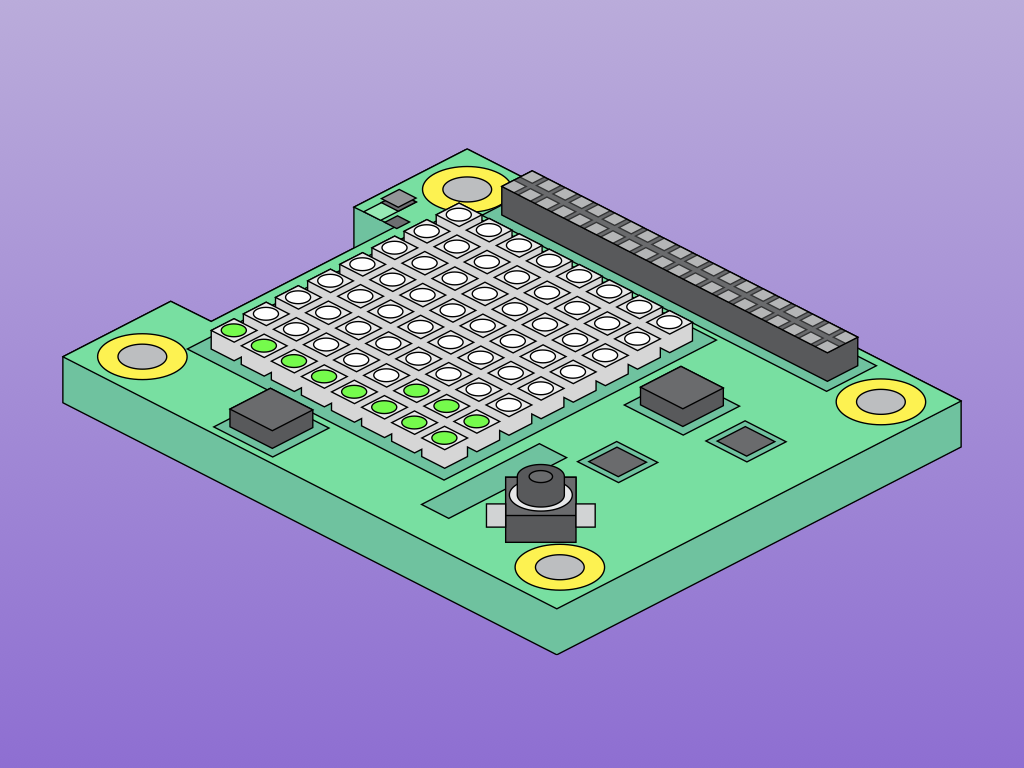
Scroll pHAT HD packs a 17×7 matrix of yellow LEDs (119 pixels total) onto a single Raspberry Pi pHAT. Each pixel has individual PWM brightness control, letti...
Get notified when back in stock
Scroll pHAT HD packs a 17×7 matrix of yellow LEDs (119 pixels total) onto a single Raspberry Pi pHAT. Each pixel has individual PWM brightness control, letting you create smooth animations, anti-aliased scrolling text, and detailed visualisations.
Use it as a scrolling message board for tweets, weather, or news, as a 17-band audio spectrum analyser, or even to play simple games like Tetris, Pong, or Snake. Driven by the IS31FL3731 LED matrix controller over I²C.
Key Features
- 17×7 LED Matrix – 119 yellow pixels
- Individual PWM Brightness – Per-pixel control for smooth animations
- IS31FL3731 Driver – Handles all LED control over I²C
- pHAT Form Factor – Sits directly on the Raspberry Pi GPIO header
- Python Library – One-line installer with example scripts included
Compatibility
- Raspberry Pi 5, 4, 3B+, 3, 2, B+, A+, Zero, and Zero W
Resources
Jargon buster
Plain-language definitions for the technical terms used above.
- GPIO
- General-purpose input/output pins are microcontroller pins you can set in software to read signals, switch devices on and off, or connect to peripherals. The number of GPIO pins matters because it limits how many buttons, LEDs, sensors, and other parts you can wire directly to the board.
- LED
- A light-emitting diode (LED) is a small electronic component that emits light when current flows through it in the correct direction. Because it only conducts one way, its polarity matters, and a through-hole LED must be soldered the correct way around to light up.
- pHAT
- A smaller add-on board format for Raspberry Pi, similar in idea to a HAT but usually not full-sized. It matters because pHAT compatibility can affect how neatly a board stacks or fits into a Raspberry Pi project.
- PWM
- Pulse Width Modulation is a way for a digital pin to simulate variable output power by switching on and off very quickly. It matters for controlling things like LED brightness, motor speed, or servo-style signals from a microcontroller pin.
Find this product in
Displays & Screens
Raspberry Pi
Related Tutorials
Free guides on learn.littlebird.com.au