DFRobot
RGB LCD Backlight Module
DFRobot has a Gravity I2C LCD1602 RGB Backlight Screen which backlight can be modulated to the different backlight colors and the display effect is very bril...
Get notified when back in stock
DFRobot has a Gravity I2C LCD1602 RGB Backlight Screen which backlight can be modulated to the different backlight colors and the display effect is very brilliant. This RGB LCD backlight panel is its internal backlight component.
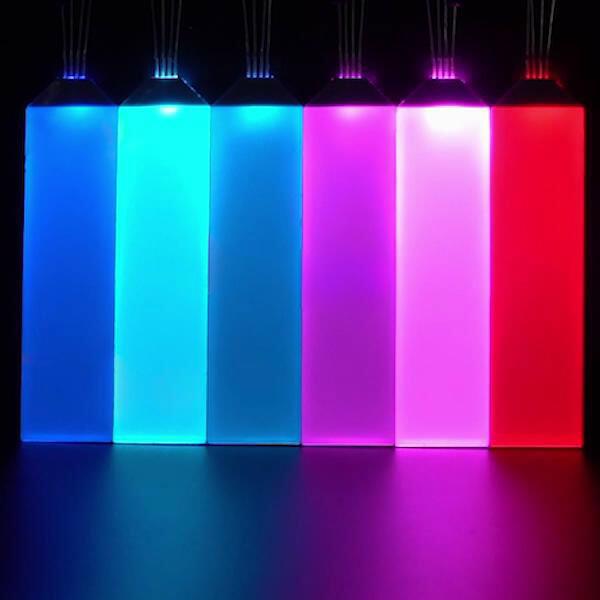
The RGB LCD backlight panel uses the RGB color model, this is an industry color standard that produces a wide variety of colors by varying three color channels: red (R), green (G), and blue (B), a total of 16 million colors, nearly all colors that human vision can perceive.
The RGB LCD backlight board has a built-in common anode diode with the black edge at the pins facing up, the pins from left to right are red, power positive, green and blue. It can be used for both backlighting and LED indicators.

Jargon buster
Plain-language definitions for the technical terms used above.
- Gravity
- Gravity is DFRobot’s plug-in connector system for sensors, motors and modules, using standard cables to reduce loose jumper wiring. It matters because Gravity-compatible parts can connect directly to these ports, while non-Gravity parts may need adapters or manual wiring.
- I2C
- I2C is a two-wire communication bus used by many sensors and small modules. It matters because several I2C devices can share the same two wires, but each device needs a compatible address and your controller must support I2C.
- LCD
- LCD stands for liquid crystal display, a screen technology that uses a backlight and liquid crystals to show images or text. It matters because LCD modules usually need a display driver and enough controller pins or a bus interface to send image data.
- LED
- A light-emitting diode (LED) is a small electronic component that emits light when current flows through it in the correct direction. Because it only conducts one way, its polarity matters, and a through-hole LED must be soldered the correct way around to light up.
- RGB
- Short for red, green and blue, the three primary colours of light that are mixed in varying amounts to make a wide range of colours. In electronics RGB can refer to an LED or pixel that blends these three colours, or to a colour signal or interface that carries separate red, green and blue channels.
Find this product in
Brands
Displays & Screens
Supplier page — dfrobot.com
Supplier Description · 327.7 KB · Click any page to view full size
Related Tutorials
Free guides on learn.littlebird.com.au