Little Bird
pi-top without Raspberry Pi 3 Grey
Does NOT include Raspberry Pi 3. The Raspberry Pi open source laptop that you've been waiting for has arrived with the Pi-Top! With this kit you can build...
Get notified when back in stock
Does NOT include Raspberry Pi 3.
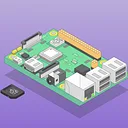
The Raspberry Pi open source laptop that you've been waiting for has arrived with the Pi-Top! With this kit you can build your very own "laptop" which at it's core runs off of the famous Raspberry Pi.
The laptop case comes with a screen, base top, base bottom, and the Pi-Top Hub PCB to take care of power management, the screen driver, and more for you.
The mission of Pi-Top is to take users from a beginner level to an advanced level of programming, design, and comfort. Let's get computing!
What's in the box?
- Screen - Connect the screen by simply slotting the metal hinge into the base bottom piece. A single cable is plugged into the Pi-Top Hub and away you go!
- Base Top - Attach and remove the base top piece by sliding it over the base bottom and pressing down. You will hear a satisfying 'click' when you have popped it into place.
- Base Bottom - The base bottom contains the battery and modular rail where you will pop in the Hub and Raspberry Pi 3. No wires or tools are required, like a lego laptop you snap everything into place. The Pi-Top smart battery pack is protected by a sheet of brushed stainless steel, so you can be sure your battery is securely in place.
- Hub - With over 150 components on this circuit board, the Pi-Top Hub PCB takes care of power management, our screen driver and a host of other functionality which allows us to turn the Raspberry Pi into a great open source laptop.
- 1x - 8GB SD Card with Pi-Top OS
- Cables connecting Pi-Top pieces
- Charger with AUS plug
- Instruction Booklet
The cables and screws can be hard to find in the packaging. This video will help you find them.
Technical Details
- Screen Details:
- 13.3” HD LCD screen with eDP interface
- 1366x768 resolution
- Colour active matrix TFT LCD module with anti-glare finish
- 3W power consumption
- PWM screen dim control (available on PCB rail)
- 60Hz refresh rate
- 262K colours
- eDP 1.2 interface
- Base Top:
- Keyboard
- Fully reprogrammable via USB
- Any character can be put on any key position, to suit user’s exact preferences
- UK and US vinyl layouts available
- 2.2mm operating distance
- 28 pin FPC cable
- Trackpad
- PalmCheck feature helps prevents unwanted mouse clicks
- PS/2 interface
- 1N mouse click operating force
- 8 pin FPC cable
- Base Bottom:
- Smart Battery Pack
- Two–wire SMBus v2.0 interface
- JEITA recommended charge profile
- Over–current, over–voltage, over–temperature and short–circuit protection
- Charge balancing for extenxed lifetime
- 51.8 Watt–hour capacity
- 10–12 hours run time
- Hub:
- Power management
- Screen driver (HDMI to eDP conversion)
- Battery LED indicators
- 18V. 3A input
- 5V. 3.5A output
- 3.3V 500mA output
- Persistent 3.3V output (available even when powered off)
- PCB rail specification pinout connects UART, I2C and SPI to Raspberry Pi for use with add-on boards.
- Dimensions (assembled): 342mm x 211mm x 45mm / 13.5" x 8.3" x 1.8"
- Weight (assembled with a Pi inside): 1515g / 3.3lb
You can add a prototyping shield here to hook up all your cool electronics.
And some speakers for your pi-top tunes here
Resources
Jargon buster
Plain-language definitions for the technical terms used above.
- eDP
- Embedded DisplayPort (eDP) is an internal display interface used to connect a computer board directly to a built-in panel rather than an external monitor. When a display uses eDP, it requires a host board with a matching eDP connector and support, and will not plug into a standard external output such as HDMI.
- FPC
- FPC stands for flexible printed circuit, a thin flat flexible cable or connector style often used where space is tight or some movement is needed, commonly for displays, cameras and other high-density connections. Connecting to an FPC connector generally needs a matching cable with the correct pin count, pitch and contact orientation.
- HDMI
- HDMI is a common digital video and audio connection used by computers, media players, and many displays. If a display kit has HDMI input, it is usually much easier to test with a single-board computer because it can act like a normal monitor.
- I2C
- I2C is a two-wire communication bus used by many sensors and small modules. It matters because several I2C devices can share the same two wires, but each device needs a compatible address and your controller must support I2C.
- LCD
- LCD stands for liquid crystal display, a screen technology that uses a backlight and liquid crystals to show images or text. It matters because LCD modules usually need a display driver and enough controller pins or a bus interface to send image data.
- LED
- A light-emitting diode (LED) is a small electronic component that emits light when current flows through it in the correct direction. Because it only conducts one way, its polarity matters, and a through-hole LED must be soldered the correct way around to light up.
- PCB
- A printed circuit board (PCB) is a board, usually rigid, with etched copper tracks that connect electronic components together without loose wiring. Components are mounted on the board and signals route between them through the copper layout.
- PWM
- Pulse Width Modulation is a way for a digital pin to simulate variable output power by switching on and off very quickly. It matters for controlling things like LED brightness, motor speed, or servo-style signals from a microcontroller pin.
- Shield
- An add-on board that plugs into a main controller board to give it extra features such as sensing, motor control or communication. Knowing a product supports shields helps you judge whether it can connect neatly into an existing maker-board setup.
- SPI
- A fast serial communication bus often used for displays, memory cards, and sensors. It matters because SPI devices need specific pins for clock and data, plus a separate chip-select line for each device.
- TFT
- A thin-film transistor display is a common type of colour LCD used for graphics screens. Knowing a product is for TFTs helps you check that the driver board matches the display’s connector, resolution, backlight, and signalling method.
- UART
- UART is a simple asynchronous serial interface that sends data over separate transmit and receive wires, usually labelled TX and RX, with both ends set to the same baud rate. It is a common way for microcontrollers and other serial devices to exchange data.
Find this product in
Raspberry Pi
STEM & Education
pi top assembly
Document · 2.1 MB · Click any page to view full size
Resources & Downloads
Guides, code examples, and more
Related Tutorials
Free step-by-step guides