SparkFun
micro:bit v2 Club Kit - Go Bundle 10-Pack
All Products
More from Pi Australia
New Arrivals
SparkFun
Classroom Starter Kits for Micro:Bit
Brands and Manufacturers
micro:bit
Digital Technologies
Micro:bit Kits
Education
STEM Education Kits
$288.35
$307.00
Save 6%
|
In stock
This micro:bit v2 Club Kit contains ten, count em', ten micro:bit v2 Go Bundles that provides you with everything you need to get hooked up and powered. T...
Get notified when back in stock
Estimated Delivery
Arrives
Order now — ships Tue 11 Aug
Disclaimer
Secure checkout
This micro:bit v2 Club Kit contains ten, count em', ten micro:bit v2 Go Bundles that provides you with everything you need to get hooked up and powered. This kit includes the micro:bit v2, a short USB cable, a AAA battery holder and AAA batteries. Also inside the Go Bundle you will find a Quick Start Guide with four unique ideas to get you started with micro:bit! The Go Bundle is a quick and economical way to get started with the micro:bit. So gather up your crew, give your club a cool name & get programming!
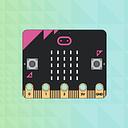
The micro:bit v2 is a pocket-sized computer that lets you get creative with digital technology. Each order contains just the micro:bit v2 board. You can code, customize and control your micro:bit from anywhere! You can use your micro:bit for all sorts of unique creations, from robots to musical instruments and more. At half the size of a credit card, you will be surprised at the amount of hardware each board is equipped with, including 25 red LED lights that can flash messages. There are two programmable tactile buttons, and a touch sensative logo that can be used to control games or pause and skip songs on a playlist. The micro:bit can even detect motion and tell you which direction you’re heading. It can also use Bluetooth Low Energy (BLE 5.0) to interact with other devices and the Internet.
On the front of the board you will find the 5x5 LED array that you can use as a light sensor, a tiny screen to draw on, display words, numbers and other information, microphone input & LED indicator, two programmable tactile buttons, and the touch sensitive logo! On the back of the board you will find the brains of the micro:bit, a 64 MHz, ARM Cortex-M4 microcontroller with FPU, 512KB Flash, 128KB RAM and a built-in temperature sensor. Additionally, the back of the micro:bit is populated by an accelerometer, compass, MEMS microphone, speaker, and Bluetooth Smart antenna, as well as a microUSB and two-pin JST connector for different power options. Finally, at the bottom of the board you will find 25 gold-tabbed edge pins and five ring connectors (three for digital/analog I/O, two for power and ground) for hooking up external components. The tabs with larger holes can be easily used with alligator clips are now notched fore easier connection to prototype added components quickly.
The micro:bit v2 has even supplied an intuitive mobile app that lets you send your code to your micro:bit over Bluetooth (without using a USB cable). With this app you will be able to interact with your micro:bit on a higher level of accessibility.
The micro:bit is a pocket-sized computer that lets you get creative with digital technology. Between the micro:bit and our shield-like bit boards you can do almost anything while coding, customizing and controlling your micro:bit from almost anywhere! You can use your micro:bit for all sorts of unique creations, from robots to musical instruments and more. At half the size of a credit card, this versatile board has vast potential!
Jargon buster
Plain-language definitions for the technical terms used above.
- ARM Cortex-M4
- The ARM Cortex-M4 is a 32-bit processor core widely used inside microcontrollers, often with hardware support for signal-processing and control tasks. It provides enough processing power to run embedded programs that handle sensors, wireless communication, audio and similar workloads.
- BLE
- BLE stands for Bluetooth Low Energy, a Bluetooth mode designed for low power use and broad compatibility with modern phones and computers. It connects well to battery-powered and mobile devices, including Apple hardware, though it behaves differently from Bluetooth Classic and its serial-style profiles.
- edge pins
- Edge pins are exposed electrical contacts along the edge of a board that let you connect to power, signals, and accessories. They matter because they make it easier to attach clips, expansion boards, or external components without soldering.
- FPU
- A floating-point unit is hardware inside a processor that speeds up calculations with decimal numbers. This helps when projects use maths-heavy tasks such as motion sensing, filtering sensor readings, or audio processing.
- LED
- A light-emitting diode (LED) is a small electronic component that emits light when current flows through it in the correct direction. Because it only conducts one way, its polarity matters, and a through-hole LED must be soldered the correct way around to light up.
- MEMS microphone
- A tiny microphone made using micro-electromechanical systems, the same style of miniature manufacturing used in many phone sensors. It lets the board detect sound without needing an external microphone, which is useful for noise-reactive projects and simple audio input.
- microcontroller
- A microcontroller is a small computer on a single chip that runs a stored program and controls connected inputs and outputs such as buttons, sensors, displays and communication interfaces. In a device built around one, it is the part that executes the code and coordinates the device's behaviour.
- RAM
- RAM (random-access memory) is fast, temporary memory a device uses for working data while it is running; in its common volatile form, its contents are lost when power is removed. Some devices offer a mode that applies settings to RAM only, which is handy for testing changes temporarily because they are not stored permanently and disappear at power-off.
- Shield
- An add-on board that plugs into a main controller board to give it extra features such as sensing, motor control or communication. Knowing a product supports shields helps you judge whether it can connect neatly into an existing maker-board setup.
Find this product in
Brands
STEM & Education
Supplier page — sparkfun.com
Supplier Description · 983.6 KB · Click any page to view full size
Related Tutorials
Free step-by-step guides