Pimoroni
micro:bit Complete Starter Kit
The ultimate project kit for the micro:bit. Includes all essential accessories and a great electronics kit so you can get started with micro:bit projects....
Get notified when back in stock
The ultimate project kit for the micro:bit. Includes all essential accessories and a great electronics kit so you can get started with micro:bit projects.
To get you off to a flying start we have included an easy to follow tutorial book which guides you through everything you will need to know about programming the BBC micro:bit. You don't need any experience with programming as the tutorial book will guide you every step of the way. You'll be programming and creating circuits in no time!
Includes:
- micro:bit
- microB USB cable for power/programming
- 2 x AAA battery holder for mobile power
- 2 x AAA batteries
- Kitronik Inventor's Kit for micro:bit
Features:
- No soldering required - build your first circuit in minutes!
- Make 10 experiments included in the provided step-by-step tutorial book.
- All parts are included to conduct the 10 experiments (listed below).
- Breaks out 21 accessible pins from the micro:bit using the Edge Connector Board for the micro:bit (included).
- Small Prototype Breadboard included for fast prototyping.
All of the experiments included in this booklet (listed below) are based on the Microsoft BlockEditor and Microsoft TouchDevelop editor software.
Experiments included in the tutorial book:
- Experiment One: Say 'Hello' to the micro:bit.
- Experiment Two: Using an LDR & analog inputs.
- Experiment Three: Dimming an LED using a potentiometer.
- Experiment Four: Using a transistor to drive a motor.
- Experiment Five: Using the accelerometer to control motor speed.
- Experiment Six: Setting the tone with a piezo buzzer.
- Experiment Seven: Wind power.
- Experiment Eight: Making a game using the compass.
- Experiment Nine: Capacitor charge circuit.
- Experiment Ten: Using an RGB LED.
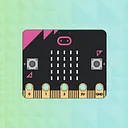
The micro:bit is a pocket-sized codeable computer with motion detection, a built-in compass, LED display, and Bluetooth technology built in. It also connects to other devices, sensors, kits and objects, and is a companion to Arduino, Galileo, Kano, littleBits and Raspberry Pi, acting as a spring board to more complex learning.
Jargon buster
Plain-language definitions for the technical terms used above.
- Galileo
- Europe’s satellite navigation system. Galileo support can improve satellite availability and accuracy, especially when combined with GPS and other constellations.
- LED
- A light-emitting diode (LED) is a small electronic component that emits light when current flows through it in the correct direction. Because it only conducts one way, its polarity matters, and a through-hole LED must be soldered the correct way around to light up.
- Motion detection
- The ability to sense that something has moved, either by comparing successive camera frames or by using a dedicated sensor such as a PIR (infrared) or radar module. When a product lists motion detection, movement can be used as a trigger so a system only acts or records when there is activity rather than running continuously.
- photocell
- A light-sensitive component whose electrical resistance changes with the amount of light falling on it. It matters when choosing or using light sensors, automatic lights, or brightness-detecting circuits because its response speed, resistance range, and sensitivity affect how reliably it detects light levels.
- potentiometer
- A variable resistor usually turned with a knob or shaft to create an adjustable electrical signal. It is often used for inputs such as volume, brightness or position, so it helps beginners learn how a microcontroller reads changing values.
- RGB
- Short for red, green and blue, the three primary colours of light that are mixed in varying amounts to make a wide range of colours. In electronics RGB can refer to an LED or pixel that blends these three colours, or to a colour signal or interface that carries separate red, green and blue channels.
Find this product in
STEM & Education
Related Tutorials
Free step-by-step guides