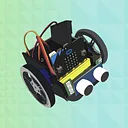
A bulk pack of 10 BBC micro:bit Go Bundles, each containing everything needed to get started. Ideal for STEM groups, coding clubs, school classes, scouts, guides, and workshops — everything is included so participants can start coding right away.
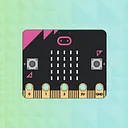
The micro:bit is a pocket-sized programmable computer (40 × 50 mm) with a 5×5 LED matrix, two programmable buttons, motion sensor, compass, Bluetooth, and a 20-pin edge connector for expansion. It can be programmed using MakeCode, Python, or Scratch.
Micro:bit Features
-
Processor – 32-bit ARM Cortex-M0 CPU
-
5×5 LED Matrix – 25 red LEDs for animations, text, and patterns
-
Two Programmable Buttons – For games, input, and control
-
Accelerometer – 3-axis motion detection (shake, tilt, free-fall)
-
Magnetometer – Built-in compass with 3D direction sensing
-
Bluetooth Smart – Connect to other micro:bits, phones, and tablets
-
20-Pin Edge Connector – Interface with Raspberry Pi, Arduino, and other boards
-
5 Ring I/O – Including power, ground, and 3 I/O pins
-
Micro-USB – Appears as a USB drive for easy code transfer
Ideal For
- School classrooms and STEM programmes
- Coding clubs and after-school groups
- Scouts, guides, and cubs activities
- Workshops and maker events
Package Contents (×10 sets)
- 10× BBC micro:bit boards
- 10× USB cables
- 10× Battery holders
- 20× AAA batteries
Jargon buster
Plain-language definitions for the technical terms used above.
- LED
-
A light-emitting diode (LED) is a small electronic component that emits light when current flows through it in the correct direction. Because it only conducts one way, its polarity matters, and a through-hole LED must be soldered the correct way around to light up.
- magnetometer
-
A sensor that measures magnetic fields, often used to work out compass direction. It matters because nearby magnets, motors, or metal objects can affect readings and may require calibration.
- Motion detection
-
The ability to sense that something has moved, either by comparing successive camera frames or by using a dedicated sensor such as a PIR (infrared) or radar module. When a product lists motion detection, movement can be used as a trigger so a system only acts or records when there is activity rather than running continuously.