

Elecrow
ESP8266 TPYBoard V202 Pyboard MicroPython Development Board
This development board is based on ESP8266, it transmits data through the USB interface. The WiFi communication supports python language, makes it possible f...
Get notified when back in stock
This development board is based on ESP8266, it transmits data through the USB interface. The WiFi communication supports python language, makes it possible for you master the communication technology of 8266 module. This microPython development supports Lua and MocroPython development languages and fully compatible with NodeMCU. It is a high cost-effective development board, and it can be used in IOT applications easily.

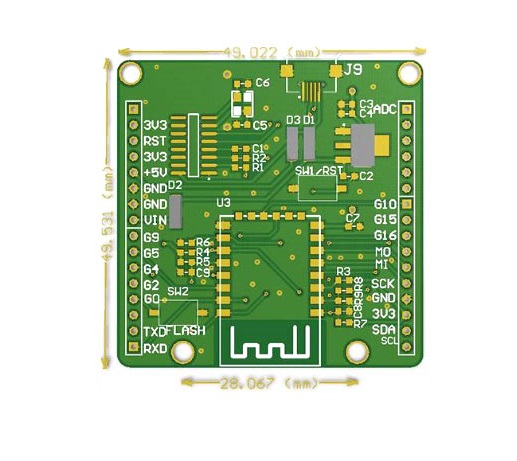

Features
- Built-in low-power 32-bit CPU, it can be used as an application processor.
- Supporting 802.11 b/g/n wireless protocol.
- Supporting STA/ AP/ STA+ AP three working modes.
- Built-in TCP/ IP protocol stack.
Specifications
- Frequency: 80M
- Interface: GPIO, SPI, I2C, USART, ADC
- USB interface type: USB2.0
- MCU: ESP8266
- Working voltage: 3.5v-10v (power by USB)
- Size: 50mm x 50mm
- Weight: 30g
Package list
- ESP8266 TPYBoard V202 Pyboard MicroPython Development Board x 1
- USB cable x 1
Wiki & External links
Jargon buster
Plain-language definitions for the technical terms used above.
- ADC
- An analogue-to-digital converter reads a changing voltage and turns it into a number the microcontroller can use. It matters when connecting analogue sensors such as light, sound, or variable-resistor sensors.
- GPIO
- General-purpose input/output pins are microcontroller pins you can set in software to read signals, switch devices on and off, or connect to peripherals. The number of GPIO pins matters because it limits how many buttons, LEDs, sensors, and other parts you can wire directly to the board.
- I2C
- I2C is a two-wire communication bus used by many sensors and small modules. It matters because several I2C devices can share the same two wires, but each device needs a compatible address and your controller must support I2C.
- IoT
- Short for Internet of Things, meaning physical devices that connect to networks or the internet to send data or be controlled remotely. It matters if you want projects such as connected sensors, remote controls or classroom data-logging activities.
- MicroPython
- A version of the Python programming language made to run on microcontrollers. It matters because it lets beginners write readable code to control LEDs, sensors, motors and displays without needing to start with lower-level languages.
- SPI
- A fast serial communication bus often used for displays, memory cards, and sensors. It matters because SPI devices need specific pins for clock and data, plus a separate chip-select line for each device.
Find this product in
Connectivity

