Adafruit
74HC595 Shift Register - 3 pack
·
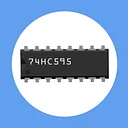
A pack of three 74HC595 shift register ICs. These chips take a serial input (SPI) of one byte and output those 8 bits onto 8 digital output pins. Chain multi...
Get notified when back in stock
A pack of three 74HC595 shift register ICs. These chips take a serial input (SPI) of one byte and output those 8 bits onto 8 digital output pins. Chain multiple chips together by connecting the serial output of one to the serial input of the next — three chips give you 24 digital outputs from just 3 microcontroller pins.
DIP package for easy breadboard and perfboard use. Each output can source approximately 20mA, making them ideal for driving LEDs directly or switching power transistors for solenoids and motors.
Key Features
- 3× 74HC595 ICs – 8-bit serial-in, parallel-out shift registers
- Chainable – Daisy-chain for 16, 24, or more outputs
- ~20mA Per Output – Drive LEDs directly or switch transistors
- SPI Interface – Only 3 microcontroller pins needed
- DIP-16 Package – Breadboard and perfboard compatible
Also Available
Ideal For
- LED arrays and matrix displays
- Output expansion for Arduino and microcontrollers
- Driving solenoids and motors via transistors
Package Contents
- 3× 74HC595 shift register ICs
Resources
Jargon buster
Plain-language definitions for the technical terms used above.
- LED
- A light-emitting diode (LED) is a small electronic component that emits light when current flows through it in the correct direction. Because it only conducts one way, its polarity matters, and a through-hole LED must be soldered the correct way around to light up.
- microcontroller
- A microcontroller is a small computer on a single chip that runs a stored program and controls connected inputs and outputs such as buttons, sensors, displays and communication interfaces. In a device built around one, it is the part that executes the code and coordinates the device's behaviour.
- SPI
- A fast serial communication bus often used for displays, memory cards, and sensors. It matters because SPI devices need specific pins for clock and data, plus a separate chip-select line for each device.
Find this product in
Brands
Related Tutorials
Free step-by-step guides