

Adafruit
TinyG CNC Controller Board v8
·
All Products
New Arrivals
Brands and Manufacturers
Microcontrollers & Development Boards
Robotics & Motion
Prototyping & Wiring
Little Bird Electronics
Microcontrollers
$414.50
|
Out of stock
The TinyG project is a high performance, USB based CNC 6-axis controller that supports XYZ linear and ABC rotary axes with 4 motor outputs. It is designed fo...
Get notified when back in stock
Estimated Delivery
Arrives
Disclaimer
Secure checkout
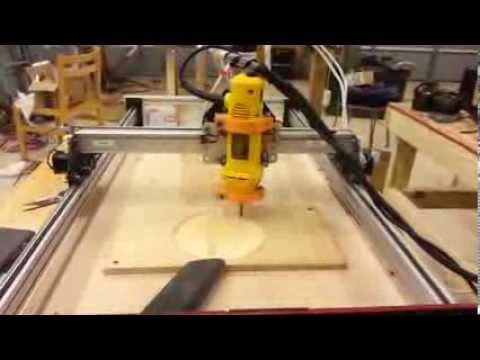
The TinyG project is a high performance, USB based CNC 6-axis controller that supports XYZ linear and ABC rotary axes with 4 motor outputs. It is designed for small CNC applications and other applications that require highly controllable motion control. TinyG is meant to be a complete embedded solution for small or medium motor control.
Main Features:
- Full, integrated motion control system with embedded microcontroller (Atmel ATxmega192) and 4 stepper motor drivers (TI DRV8811) integrated on a ~4 inch square board
- Four stepper motor drivers
- Accepts G-code from USB port and interprets it locally on the board
- Axis/motor mapping to support dual gantry and other configurations (e.g. XYYZ, XYZA, XYZC...) of a 6-axis control (XYZ + ABC rotary axes) setup
- Acceleration planning performed using constant jerk motion equations (3rd order S curves) for very smooth and fast motion transitions for lines and arcs
- Very smooth step pulse generation using phase-optimized, smart oversampling, fractional step DDA running at 50 Khz with very low jitter (<<1uSec)
- Networkable via RS485 to support motion peripherals and for networking mutliple boards for multi-axis systems and for really interesting projects (up to 1000 stepper axes)
- Stepper drivers handle 2.5 amps per winding which will handle most motors up thru NEMA23 and some NEMA34 motors.
- Micro-stepping up to 1/8 (optimized DDA makes this smoother than many 1/16 implementations)
Jargon buster
Plain-language definitions for the technical terms used above.
- microcontroller
- A microcontroller is a small computer on a single chip that runs a stored program and controls connected inputs and outputs such as buttons, sensors, displays and communication interfaces. In a device built around one, it is the part that executes the code and coordinates the device's behaviour.
- oversampling
- Taking many measurements and combining them to reduce noise and improve the stability of a reading. It matters when you want smoother current or power measurements, though it can make updates slower.
- RS485
- RS485 is a robust differential serial communication standard often used in factories, farms and buildings where cables may be long or electrically noisy, and it can link many devices on a single pair of wires. When a product lists RS485, it can communicate with industrial sensors, meters and control equipment over longer distances than typical hobby serial wiring.
Find this product in

