

Adafruit
Rotating LED Warning Light with Adjustable Volume Buzzer Alarm
·
THE REACTOR'S MELTING DOWN! GRAB THE FUEL CORE, JENNA, AND EVACUATE THE COMMAND CENTER! With this Rotating LED Warning Light with Adjustable Volume Buzzer Al...
Get notified when back in stock
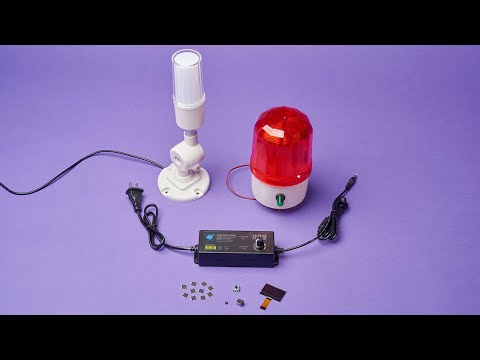
THE REACTOR'S MELTING DOWN! GRAB THE FUEL CORE, JENNA, AND EVACUATE THE COMMAND CENTER! With this Rotating LED Warning Light with Adjustable Volume Buzzer Alarm, you can monitor and easily alert humanoids as to the status of a project, machine, or even if the bathroom is occupied!
This alarm is very very simple - provide anywhere from 3V to 12V DC to the two power wires, and the LEDs inside start lighting up in a rotating manner. If the volume knob is turned up, you'll also get an incredibly-annoying buzzer sound as well.
If you want to turn this on only sometimes, you'll want to use a power transistor (like the venerable TIP120) or power FET (like this nice N-Channel MOSFET) to enable or disable power. Since it isn't inductive, you don't need a protection diode. We have an example guide on using transistors to power a high current item here.
If you want something with multiple colors, we got some really nice tower lights here.
Jargon buster
Plain-language definitions for the technical terms used above.
- DC
- DC means direct current, where electricity flows in one constant direction, as supplied by batteries, USB ports and many plug-pack power supplies. When a product specifies DC, it runs from a DC supply rather than mains AC, so you need to provide the correct voltage and polarity.
- LED
- A light-emitting diode (LED) is a small electronic component that emits light when current flows through it in the correct direction. Because it only conducts one way, its polarity matters, and a through-hole LED must be soldered the correct way around to light up.
Find this product in
Audio & Video
transistors 101
Document · 1.1 MB · Click any page to view full size
drv8833
Datasheet · 953.3 KB · Click any page to view full size
Resources & Downloads
Guides, code examples, and more

