Little Bird
Raspberry Pi 4 Starter Kit
A lot of fun squeeezed into a tiny computer! Everything* you need to to get started with the Raspberry Pi 4!Protect your Pi from bumps and bruises in ou...
Get notified when back in stock
A lot of fun squeeezed into a tiny computer! Everything* you need to to get started with the Raspberry Pi 4!
Protect your Pi from bumps and bruises in our slick Pibow case, add a heat sink to improve thermal performance, then learn how to code the Blinkt! rainbow light that comes with your kit, using the Python programming language. You can even make a (SQUEE!) rainbow animation with it!
Just pop the pre-imaged micro-SD card into your Pi, plug in all the bits, and away you go! After you've installed our Blinkt! software (it's super simple) you'll learn how to code it with Python.
There's a sheet of 11 fun and colourful (and peel-able off-able) stickers to personalise your Pibow case, and even a name sticker.
Kit includes
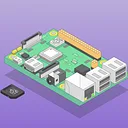
- Raspberry Pi 4 (1GB RAM)
- Keyboard and mouse
- Pibow case
- OS with Minecraft and Scratch (on microSD card)
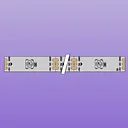
- Blinkt! with 8 rainbow lights
- HDMI display cable and micro-HDMI adaptor
- Heat sink
- Worldwide USB-C power supply
- Getting started guide
- Sticker sheet with 11 stickers
*just add a monitor or TV as a display
Specifications
- 1.5GHz 64-bit quad-core ARM Cortex-A72 CPU ( ARM v8, BCM2837)
- 1GB RAM (LPDDR4)
- On-board wireless LAN - dual-band 802.11 b/g/n/ac
- On-board Bluetooth 5.0, low-energy (BLE)
- 2x USB 3.0 ports, 2x USB 2.0 ports
- Gigabit ethernet
- Power-over-Ethernet (requires additional Raspberry Pi PoE HAT)
- 40-pin GPIO header
- 2× micro-HDMI ports (up to 4Kp60 supported)
- H.265 (4Kp60 decode)
- H.264 (1080p60 decode, 1080p30 encode)
- OpenGL ES, 3.0 graphics
- DSI display port, CSI camera port
- Combined 3.5mm analog audio and composite video jack
- Micro-SD card slot
- USB-C power
Jargon buster
Plain-language definitions for the technical terms used above.
- BLE
- BLE stands for Bluetooth Low Energy, a Bluetooth mode designed for low power use and broad compatibility with modern phones and computers. It connects well to battery-powered and mobile devices, including Apple hardware, though it behaves differently from Bluetooth Classic and its serial-style profiles.
- DSI
- DSI stands for Display Serial Interface, a high-speed connection commonly used to send video data from a computer board to a display. It matters because DSI signals are not simple GPIO wires, so the cable, connector, and signal routing need to match the display interface.
- GPIO
- General-purpose input/output pins are microcontroller pins you can set in software to read signals, switch devices on and off, or connect to peripherals. The number of GPIO pins matters because it limits how many buttons, LEDs, sensors, and other parts you can wire directly to the board.
- H.265
- A video compression standard, also called HEVC, that reduces video file size and bandwidth compared with older formats. It matters for vision and AI projects because hardware H.265 encode/decode support can handle many camera streams more efficiently.
- HDMI
- HDMI is a common digital video and audio connection used by computers, media players, and many displays. If a display kit has HDMI input, it is usually much easier to test with a single-board computer because it can act like a normal monitor.
- LPDDR4
- A low-power type of RAM commonly used in phones and embedded computers. More LPDDR4 memory lets a board run larger programs, Linux services, or AI models more smoothly.
- microSD card
- A microSD card is a small removable flash memory card used to store data such as audio, images, logs or program files. Its capacity and formatting (often FAT32 or exFAT) affect how much can be stored and whether the card needs preparing before use.
- PoE
- Power over Ethernet lets one Ethernet cable carry both network data and electrical power. This is useful when installing a device where running a separate power adaptor would be difficult.
- RAM
- RAM (random-access memory) is fast, temporary memory a device uses for working data while it is running; in its common volatile form, its contents are lost when power is removed. Some devices offer a mode that applies settings to RAM only, which is handy for testing changes temporarily because they are not stored permanently and disappear at power-off.
- USB 2.0
- USB 2.0 is a widely used wired standard for carrying both data and power between a device and a computer or other compatible host, with data rates up to 480 Mbps. It indicates the kind of port a device uses and that it should work with most modern and many older computers.
- USB-C
- USB-C is a small, reversible USB connector that can carry power, data and, on some devices, video over a single cable. The same connector can range from charging only to high-speed data, so the functions a given port actually supports vary.
Find this product in
Brands
Raspberry Pi
STEM & Education
Related Tutorials
Free step-by-step guides