Description:
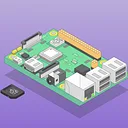
This is the new Raspberry Pi 3 Model B+ STEM kit. It contains all the things you will need to get started. It differs from the Beginners Kit (LB-00108) only by the addition of a breakout board and breadboard to make your prototyping connections easy! Kit includes the new Raspberry Pi 3 Model B+ computer, breakout board, breadboard, official power supply, Pi 3 official case, HDMI cable, and preloaded Noob SD card.
Applications include learning programming in Python, Scratch, web servers, home brew Weather stations, Retro Pi gaming consoles, robots, media servers, or your own awesome DIY maker project!
The Kit contains:
Raspberry Pi 3 model B+ https://littlebirdelectronics.com.au/products/raspberry-pi-3-model-b~161992
Power supply https://littlebirdelectronics.com.au/products/raspberry-pi-power-supply-5v-2-5-amp
Official case https://littlebirdelectronics.com.au/products/raspberry-pi-official-case-for-raspberry-pi-3
Breakout board https://littlebirdelectronics.com.au/products/assembled-pi-t-cobbler-plus-gpio-breakout-for-raspi-a-b-pi-2
Breadboard https://littlebirdelectronics.com.au/products/400-tie-point-interlocking-solderless-breadboard
HDMI cable https://littlebirdelectronics.com.au/products/hdmi-high-speed-cable-1m
Noob SD card https://littlebirdelectronics.com.au/products/16gb-microsd-card-with-noobs-for-raspberry-pi-3-model-b
Specifications:
Broadcom BCM2837B0 64bit ARM Cortex-A53 Quad Core Processor SoC running @ 1.4GHz
1 GB RAM
4 x USB2.0 Ports with up to 1.2A output
Expanded 40-pin GPIO Header
Video/Audio Out via 4-pole 3.5mm connector, HDMI, CSI camera, or Raw LCD (DSI)
Storage: microSD
10/100 Ethernet (RJ45)
Cyprus Wireless CYW43455 on Board
Bluetooth Low Energy (BLE) on board
Low-Level Peripherals:
27 x GPIO
UART
I2C bus
SPI bus with two chip selects
+3.3V
+5V
Ground
Power Requirements: 5V @ 2.4 A via microUSB power source
Supports Raspbian, Windows 10 IoT Core, OpenELEC, OSMC, Pidora, Arch Linux, RISC OS and More!
Resources:
Pi Foundation website https://www.raspberrypi.org/
Noobs download https://www.raspberrypi.org/downloads/noobs/
FAQ’s https://www.raspberrypi.org/help/faqs/
Jargon buster
Plain-language definitions for the technical terms used above.
- Arm Cortex-A53
-
A 64-bit Arm processor core commonly used in Linux-capable embedded boards. It matters because it is suited to higher-level computing tasks such as networking, graphics, and running multiple applications.
- BLE
-
BLE stands for Bluetooth Low Energy, a Bluetooth mode designed for low power use and broad compatibility with modern phones and computers. It connects well to battery-powered and mobile devices, including Apple hardware, though it behaves differently from Bluetooth Classic and its serial-style profiles.
- breakout
-
A breakout board carries a small or fine-pitched component and brings its connections out to standard, breadboard- and header-friendly pins. Describing a part as a breakout means it can be wired into a project without soldering directly to the component's tiny contacts.
- DSI
-
DSI stands for Display Serial Interface, a high-speed connection commonly used to send video data from a computer board to a display. It matters because DSI signals are not simple GPIO wires, so the cable, connector, and signal routing need to match the display interface.
- GPIO
-
General-purpose input/output pins are microcontroller pins you can set in software to read signals, switch devices on and off, or connect to peripherals. The number of GPIO pins matters because it limits how many buttons, LEDs, sensors, and other parts you can wire directly to the board.
- HDMI
-
HDMI is a common digital video and audio connection used by computers, media players, and many displays. If a display kit has HDMI input, it is usually much easier to test with a single-board computer because it can act like a normal monitor.
- I2C
-
I2C is a two-wire communication bus used by many sensors and small modules. It matters because several I2C devices can share the same two wires, but each device needs a compatible address and your controller must support I2C.
- IoT
-
Short for Internet of Things, meaning physical devices that connect to networks or the internet to send data or be controlled remotely. It matters if you want projects such as connected sensors, remote controls or classroom data-logging activities.
- LCD
-
LCD stands for liquid crystal display, a screen technology that uses a backlight and liquid crystals to show images or text. It matters because LCD modules usually need a display driver and enough controller pins or a bus interface to send image data.
- RAM
-
RAM (random-access memory) is fast, temporary memory a device uses for working data while it is running; in its common volatile form, its contents are lost when power is removed. Some devices offer a mode that applies settings to RAM only, which is handy for testing changes temporarily because they are not stored permanently and disappear at power-off.
- RJ45
-
The common plug and socket style used for wired Ethernet network cables. If a board has an RJ45 connector, you can usually plug it into standard Ethernet cabling without making a custom connector.
- SPI
-
A fast serial communication bus often used for displays, memory cards, and sensors. It matters because SPI devices need specific pins for clock and data, plus a separate chip-select line for each device.
- UART
-
UART is a simple asynchronous serial interface that sends data over separate transmit and receive wires, usually labelled TX and RX, with both ends set to the same baud rate. It is a common way for microcontrollers and other serial devices to exchange data.