Adafruit
Pimoroni noise:bit for micro:bit
·
*HONK* *HONK* micro:bit comin' thru! Maybe you've played with the micropython speech module, or maybe you want to have MakeCode sound effects. Well, we co...
Get notified when back in stock
*HONK* *HONK* micro:bit comin' thru! Maybe you've played with the micropython speech module, or maybe you want to have MakeCode sound effects. Well, we couldn't let the other boards have all the audio fun! Now you can make your micro:bit BLURP and BEEP with noise:bit!
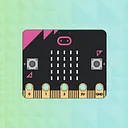
Just slide noise:bit into the micro:bit board and start MakeCoding to your maker heart's content. Generate sound bites, tones, etc, with the sound generation blocks. Or, if you're more experienced and up for a challenge, you can experiment with MicroPython in the Mu code editor!
Please note that the noise:bit is an amplifier not a synthesizer - the audio still comes from the micro:bit PWM output on pad #0. It's not going to get high quality audio reproduction but great for basic sound effects!
Features
- Comes fully-assembled and ready to use
- TPA301 amplifier chip
- 8Ω 2W Mylar speaker
- Compatible with micro:bit
- No soldering required!
Jargon buster
Plain-language definitions for the technical terms used above.
- MicroPython
- A version of the Python programming language made to run on microcontrollers. It matters because it lets beginners write readable code to control LEDs, sensors, motors and displays without needing to start with lower-level languages.
- PWM
- Pulse Width Modulation is a way for a digital pin to simulate variable output power by switching on and off very quickly. It matters for controlling things like LED brightness, motor speed, or servo-style signals from a microcontroller pin.
- TPA301
- The TPA301 is a small mono audio power amplifier chip that boosts a low-level audio signal enough to drive a small speaker. It lets a speaker be connected to a low-power audio source without adding a separate amplifier circuit.
Find this product in
Audio & Video
Sensors & Input
STEM & Education
Related Tutorials
Free step-by-step guides