Product is great, but stop asking me for feedback. What’s the value to me? Way too many emails!
Stop asking for feedback for no good reason!
Giscard Rutten
/products/{handle}.md)
and JSON
(/products.json, /products/{handle}.json).
Adafruit
·
That new Raspberry Pi® Model B+ computer you just got has a row of 2x20 pin headers soldered on - those are the GPIO (general purpose input/output) pins and ...
That new Raspberry Pi® Model B+ computer you just got has a row of 2x20 pin headers soldered on - those are the GPIO (general purpose input/output) pins and for those of us who like to hack electronics they are where the real fun is. By programming the Pi, you can twiddle those pins high or low, send and receive I2C and SPI data, and access the 3V and 5V power rails.
This cable is not compatible with the Raspberry Pi Model B or Model A!
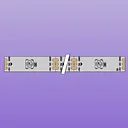
If you want to bridge those contacts out onto another PCB, you'll want this cable! It's 6" long and has 40 socket & wire sets. Pin #1 is marked with a white wire.
It's available in custom Adafruit Black and is an essential accessory for getting started with your brand new B+!
Note: The Raspberry Pi Model A+, Raspberry Pi 2 and Raspberry Pi 3 are also compatible with this product!
Plain-language definitions for the technical terms used above.
Find this product in
Brands
Raspberry Pi
Free step-by-step guides

Hi, I'm Maddy. My team and I are ready to help with your order or any questions.